_PNG.png)
Guerrilla Girls & Georgia O’Keeffe: Protesting Voices Against Sexism in Art

Updated: Aug 30
“Gender equality not only liberates women but also men from prescribed gender stereotypes.” – Emma Watson
Gender equality is a fundamental right of women that negates all evils of sexism in a contemporary society, dominated by stereotypes and discrimination. The world of art is not hidden from the clutches of social injustice, and women often fall prey to this regressive approach that limits their artistic voices and makes them invisible.
In such a world of underrepresentation, how do women feel included without having to act defensively against the denial of their basic rights?
What is Sexism in Art?

Sexism is discrimination or prejudice against women and women of color who are relegated to an inferior position in a male-dominated society. It’s quite disappointing to see women still having to deal with sexist remarks or slurs, especially when we call ourselves “modern.”
In fact, the chauvinistic attitude towards females has also made its way into the world of art, which celebrates independence, self-expression, and unbridled creativity. From academia and museums to galleries and more, social prejudice and sexism in art are everywhere!
Art has no gender, so why is an artist specifically addressed as a woman artist? On the other hand, a man simply goes by an “artist” and not otherwise. This idea echoes in the words of Sheryl Sandberg, Founder of LeanIn.Org, “In the future, there will be no female leaders. There will just be leaders.”
However, sexism in art is not just limited to labeling them, and the casual attitude towards women also includes demeaning comments in the workplace. Several women have testified to this harsh reality and their everyday struggles, where they have to cope with these sexist remarks.
Countering Sexism with Feminism in Art
Guerrilla Girls:

“When racism and sex are no longer fashionable, what will your art collection be worth?” – Guerrilla Girls
Guerrilla Girls are “the conscience of the art world” that fought for the equality of women with a witty take on sexism. Adding humor in the versions of satire, mimicry, and irony to an otherwise serious issue grabs attention to the gender inequalities within society.
It is the use of sardonicism in art that criticizes these social evils and highlights the need for immediate steps to stop the gender bias. A group of activists, the Guerrilla Girls, were anonymous feminist artists from New York City in the 1980s who wore gorilla masks to conceal their identities and even adopted pseudonyms of famous global iconic women artists like Frida Kahlo and Käthe Kollwitz.
So, you might think, why maintain anonymity? The main reason for not revealing the identities is to draw attention to the issue and not the pioneers. If you are wondering what led this “conscience of the art world” to emerge, you must know that it’s the protest against the discrimination against female artists and artists of color by Manhattan’s galleries that launched this activist art collective.
This community launched protest actions, gathered relevant data, supported cultural jamming, and was actively involved in countering sexism in art. Their first Guerrilla Girls posters appeared in 1985, which provided eye-opening facts backed by figures.
These posters invited discourse, as people were shocked by their provocativeness, which brought to light the harsh realities of gender discrimination.
Their main aim was to address both racism and sexism in the art industry, but they covered other major issues as well. In the contemporary world, the deep-rooted bias against women and the protest of the Guerrilla Girls is reinvoked through an exhibition by the Getty Research Institute titled “How to be a Guerrilla Girl,” which is an archival collection of posters, video, audio cassettes, correspondence, and other collectives.
Overall, the mission of the exhibition is to show visitors the toolkit that was used by the Guerrilla Girls. Their protest activities can be applied in the modern world as well, to fight against gender inequality.
Beyond the Simple, Repetitive & Overly Feminine
Interpretation of Georgia O’Keeffe’s Paintings
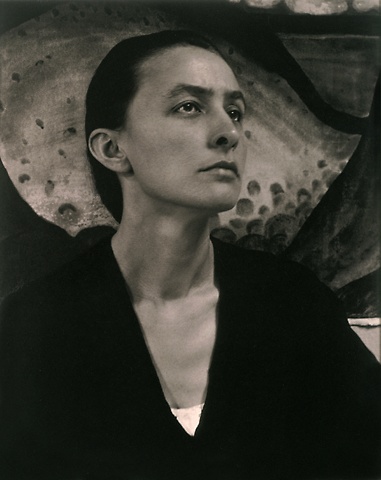
“I have always been very annoyed at being referred to as ‘a woman artist’ rather than an ‘artist’.” -- Georgia O’Keeffe
One of the greatest artists of the 20th century, Georgia O’Keeffe’s paintings consisted of enormous flowers, sensuousness, and feminine forms, but do we need to specifically label her as a woman artist? The answer is No!
The iconic American painter faced a lot of sexist criticism for the aesthetics in the early days; her art was dismissed as “unprofessional,” and she was labeled “ultra-feminine”.
In a conservative society dominated by men where sexism in art became common, this iconic painter struggled to celebrate the elemental sensuality in her art. Misogynistic critics have made comments directed at the artist rather than the art itself.
For example, the art critic Samuel M. Kootz has remarked that her paintings were about a “womanly preoccupation with sex” and that her luscious flowers had phallic symbols in them. Similarly, Paul Rosenfeld defined her as an artist with “no traces of intellectualization” and a “mind consisting of the profoundest feelings.”
With these comments from famous personalities, we can say that one must embrace not the identity but individuality in art, where objectification is totally erased.

Her simple artworks don’t necessarily make her an “ultra-feminine artist,” because categorizing artists and their artworks only limits their artistic potential and confines them within the boundaries of sexism in the art industry. Georgia O’Keeffe was connected to nature and in touch with her emotions.
She was more than simply an artist representing womanhood; she was a human being above all. Georgia O’Keeffe did not let anyone call her a “woman artist” in her lifetime and even rejected an offer for an exhibition in Los Angeles, meant for the best "female" artists.
Above all, she was a progressive thinker who didn’t keep her sensuality a mystery and expressed it through her art that was at once masculine and feminine.
Bottom Line
Sexism in art continues to be a part of this world that talks at length about feminism, the rights of women, and gender equality.
Whether it’s about the activist art collective Guerrilla Girls or artists like Georgia O’Keeffe, the core message that these impress upon society is to challenge the underrepresentation of women in art and all stereotypical notions about them.
Criticism and satire draw attention to core issues, and these tactics serve as ways to show that even art, which allows the freedom of expression, is not removed from gender biases.
These are just a few examples discussed in this blog, but if we dive deeper, we may find more such examples where artists have brought to light sexism in the canon of art history.