_PNG.png)
Before Pride Was Public: How LGBTQ Artists Redefined Queer Portraiture

Updated: Jul 27

In the month of June, the Pride month rainbow flags and the annual gay pride parade make the LGBTQ stories more visible than ever. But things were not the same before, when queer artists had to tell their narratives differently, through music, painting, literature, or any other creative form.
Before Happy Pride month celebrations even existed, or the streets were filled with the flashy flags and festoons, artists used to code their gender identity and queer perspectives through intimate portraits, symbolic sketches, and subtle visual hints, often unnoticed by onlookers.
Portraiture is a form of expression where intense human stories are captured, and experiences are celebrated through figures. Queer portraiture is such a revelation, preserving self-expression, identities, emotions, and moments in Western art history that define what it’s like to be seen through the lens of queerness.
From Hidden Identities to Visible Stories: More than Portraits
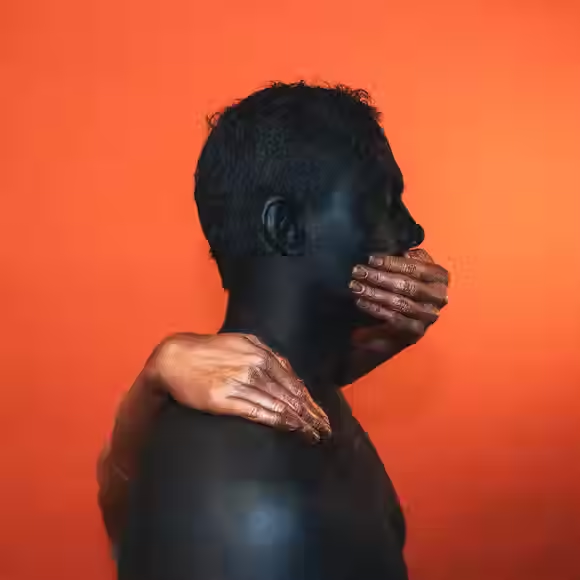
“I have nothing to say, and I am saying it.” It shows a larger truth about queer identities living their way through suppression and threat.
Previously, the mainstream Western art world experienced queer identities as something not seen in plain sight. There were social and legal restrictions on the artists, and they were forced to express themselves through symbolic portrayals or allegorical representations. Mainstream art rarely featured same-sex relationships or nonconformists of gender.
Yet they were present—in black and white, in vibrant shades, and in powerful forms and figures, braving criticism and challenging the norms of gender and identity. Some of their works inspired the next-gen pride stories, which would enjoy greater freedom in exploring sexuality and gender in open creative spaces.
Now, they are no more coded self-expressions of forbidden desires; contemporary gender-defying artists treat LGBTQ art as their authentic voices, painting portraits that embrace pride and power.
The Evolution of Queer Portraiture
The genre of portrait painting is no longer limited to picturesque depictions of faces and figures in sane proportion; it has undergone a dramatic transformation over the last few decades. As traditional portraits used to showcase the social standing and status of the sitters, contemporary queer portraiture prioritizes personal narratives and the celebration of identities.
Artists Celebrating Their Identities through Queer Portraits
Contemporary artists have redefined portraiture as something more than appearance and have transcended the boundaries of gender-defying art.
Tamara de Lempicka: Embracing Speed, Sexuality, and Modernism
Being bisexual, the Polish artist Tamara de Lempicka was open about her sexuality. Her portraits show independent, glamorous women defying gender norms, often scandalized by society.
Self-Portrait in Green Bugatti

Tamara’s Self-Portrait in a Green Bugatti shows how she was intoxicated by the world and obsessed with speed, sexuality, and modernity. Deeply immersed in Parisian nightlife and elite society, her portraits show boldness and exhibitionism.
In this imaginary portrait of riding a Bugatti, she challenged the male-dominated world of speedy cars. Here she looks in complete control of the branded vehicle, unreachable and confident in her moves—the portrait that made her famous instantly.
The Girls | Le Belle Rafaëla | Spring

Women in Tamara’s portraits are not passive sitters; they look unapologetically bold. She anchored them in modern aesthetics, adding sculptural features in those portraits. These elegant-looking females are erotic, painted through a female gaze, not as idealized beauties but as radical figures celebrating female autonomy in a male-dominated world. Tamara made her bisexual inclinations bare in a shared artistic space long before LGBTQ rights gained recognition.
David Hockney: Making Gay Art Visible
UK artist David Hockney made his gay art public long before galleries started showcasing LGBTQ art and experiences alongside mainstream art. His same-sex intimate paintings, portraying commonplace scenes of queer lives, remain significant contributions to artistic gay narratives of love, loss, grief, and joy.
We Two Boys Together Clinging

In this Walt Whitman-inspired title, We Two Boys Together Clinging, David Hockney was trying to break the techniques of traditional art schools, exhibiting male bodies as objects of desire, domesticity, and fantasy. He combines the mundane with queer undertones. It’s a pop art parade of same-sex affection when homosexuality was still prohibited socially and legally in the UK.
Zanele Muholi: Snaps of Queer Black Beauties
South African visual activist and photographer Zanele Muholi likes to be called ‘just human.’ She portrays South African LGBTQ voices, adding more meaning to contemporary portraiture. The photographic portraits show the community’s challenges facing a historical backlash.
That’s how Muholi's photographic portraits become more than just appearances, celebrating art activism, a visual narrative of queer existence that is often left unnoticed.
The Faces and Phases Series
The Faces and Phases Series covers almost 300 photographs showcasing powerful portraits of lesbians, made against plain-looking backgrounds. Muholi blended photography and activism to trigger black queer invisibility. She was touched by the faces affected by South African Apartheid. Her projects involve reading faces and bodies as new identities.

Self-portraits: Somnyama Ngonyama
Let’s talk about how Muholi documents Black LGBTQ communities in self-portraits, Somnyama Ngonyama, or Hail the Dark Lioness (translated from an African language). The black-and-white self-portraits mirror the society, posing questions on human rights and social justice while reclaiming visibility.

Catherine Opie: Astonishing Queer Shots of Family Lives
American photographer Catherine Opie’s astonishing portrait shots explore gender, sexuality, and American families in a gender-defying community. Her works have contributed to a queer America, revealing the overlooked identities and contemporary complex queer experiences.
Her Portraits of LGBTQ Families and Communities are
“An example in a public space of what it is to be brave."
One of her bold self-portraits, in which she posed with her back to the camera, to show a child’s drawing of a family carved into it. With reference to ordinary lives, she captures extraordinary acts of representation.
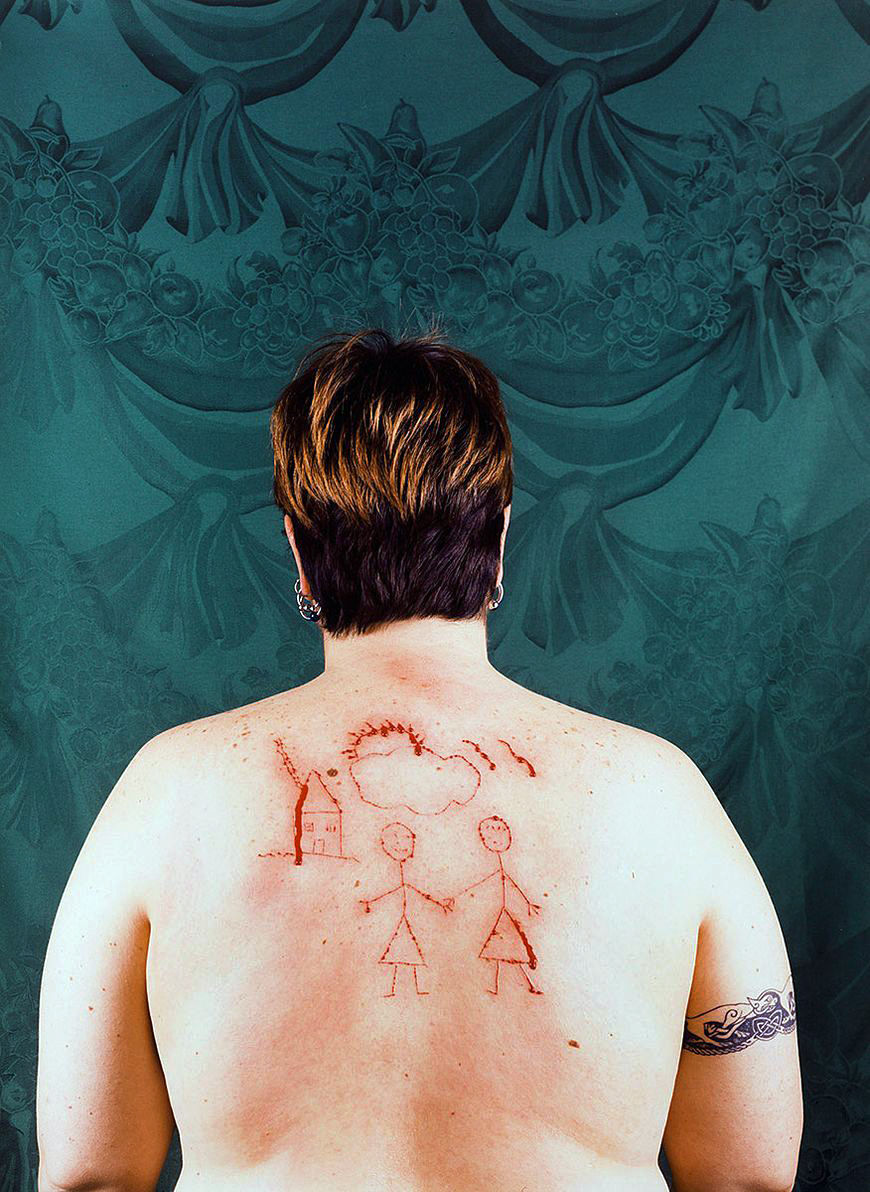
People often ask: ‘Cathy, are you trying to empty the world of everybody but queers?’ That implies how courageous her portraits are, posing bravely before the world. For Cathie, what matters most is the sincerity of her portraits.
Mickalene Thomas: Black Women in Powerful Positions
“To see yourself, and for others to see you, is a form of validation…”
Mickalene has portrayed Black queer femininity using vibrant colors and decorative elements. The striking decor expresses Black LGBTQ identities and women in a new light, challenging the stereotypical representation in art history. Those powerful portraits of African-American women show how she’s used the deliberate props and loud color contrasts to make them look difficult to ignore.
Felix Gonzalez-Torres: Queer Memorial of Loss and Love
Cuban American artist Felix Gonzalez-Torres’s Untitled (billboard of an empty bed) is a shocking revelation of queer love made public. This black and white photography tells a unique narrative of loss and grief. The photograph shows an unmade empty bed that he shared with his gay partner, Ross Laycock, until Ross died in 1991 from AIDS.
This is a queer memorial of their gender-defying relationship. The empty bed and wrinkled bedsheet become a quiet memorial to their relationship—a testament to their same-sex intimacy.
Ajamu X: Showcasing Homosexuality with Dignity
One of Ajamu’s striking self-portraits read, “My Black queer body on a white chaise longue.”
British photographer Ajamu X’s works document queer identity through photographic portraiture. His works show bold and fearless promotion of homosexuality, challenging stereotypes with dignity, poise, and self-defiance. The Syracuse-based photographer pushes his creative limits to make his works stand out. He studied the history of photography, his medium of expression to communicate identity.

Beyond Labels: When Portraiture Speaks a Thousand Words
Queer portraiture resonates strongly for self-expression that defies the norms of masculinity and femininity, moving beyond labels.
LGBTQ artists express complex ideas through fluid presentation, where identities cannot be easily boxed. They use vibrant colors and symbols to express their cultural identities. Thus, portrait painting becomes a conversation rather than a static presentation of bodies, inviting viewers to engage in a new dialogue of debunking myths relating to identity. The themes often touch spaces beyond LGBTQ realities, encouraging others to assess their experiences of belonging.
Why Queer Portraiture Matters Today: Of Pride and Presence
Popular culture and mainstream art rarely represented LGBTQ realities. Thus, LGBTQ representation in contemporary art matters today to shape visibility and cultural voice.
Queer artists in contemporary art create portraits that celebrate the sincere and separate world of experiences shown beyond gallery walls.
Amidst American Pride celebrations during the Happy Pride month of June, portraiture becomes a cultural documentation of such unsung voices, sharing stories of communities and identities that people often ignore. The paintings and the photographic portraits make viewers understand what it means to be seen, not just as queer bodies but as an archive of experiences.
The most fascinating thing about these portraits is celebrating queer history in art that refuses to stay hidden. The composed self-portraits and the intimate nonconformist photographs celebrate the legacy of representation but differently. They no longer have to whisper through symbols—they can now express their identity, pride, and presence in plain sight.