Why Is Drawing Animals So Difficult? 5 Common Mistakes and Solutions

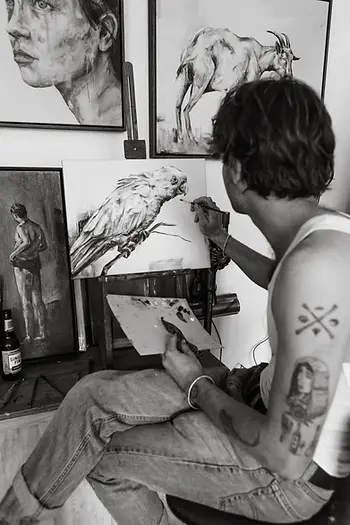
Art is not easy; to some artists, it comes naturally, while many who practice regularly get good at it. Though, whatever the case, every artist gets stuck somewhere. In this blog, we will be talking about that, and in particular, animals in art.
If you have ever gotten stuck on animal drawing, then this blog is for you. Animals are not as easy to draw as they seem to be. A dog's face, a horse’s legs, a cat’s paws, or a marine creature's gills—whatever you draw—maybe at some point your animal portrait might seem odd to you at some angle, and you can't point out why.
Well, it's not just you who have faced this problem. Animal drawings are difficult, but nearly every problem has a solution. This guide covers the most common mistakes that you can make while making animal art and how to fix them.
Why Is Drawing Animals So Difficult?
There are three major reasons why it is hard to draw animals:
The first reason is that animals rarely stay still; they keep moving, and so you have only a few seconds to capture them, especially a pose or an expression.
The bodies of each animal are very different, and they are not very well known to us. We as humans know our bodies very well, but animals' bodies are quite unfamiliar, and so it can be hard to read and understand them completely.
Humans see mistakes and flaws naturally, as we are sensitive to faces and bodies, or basically anything that we see. So even a small mistake made in a painting or drawing can look wrong.

Animals In Art History: A Long Tradition
Animal drawings are not new; we have been drawing animals in art as long as we have been on this earth, because animals have been part of our lives since the beginning. They play a vital role in maintaining our ecosystem. They are our friend as well as a danger to us.
In the beginning, humans made animal drawings in caves; you can still find traces of cave paintings at Lascaux in France and Chauvet, dated to roughly 17,000 and 30,000 years ago. There are traces of cave paintings even older than this. And the drawings included horses, lions, bison, herons, birds, etc.
Slowly, artists picked up animals to convey different emotions and feelings, to represent different meanings. For instance, Young Hare by Albrecht Dürer is a painting noticed for the detailed observation it shows.
George Stubbs's paintings are known for the liveliness they carry, like the painting Whistlejacket (c. 1762) of a horse.
Or have a look at The Horse Fair by Rosa Bonheur, one of the most famous animal painters of the 19th century.
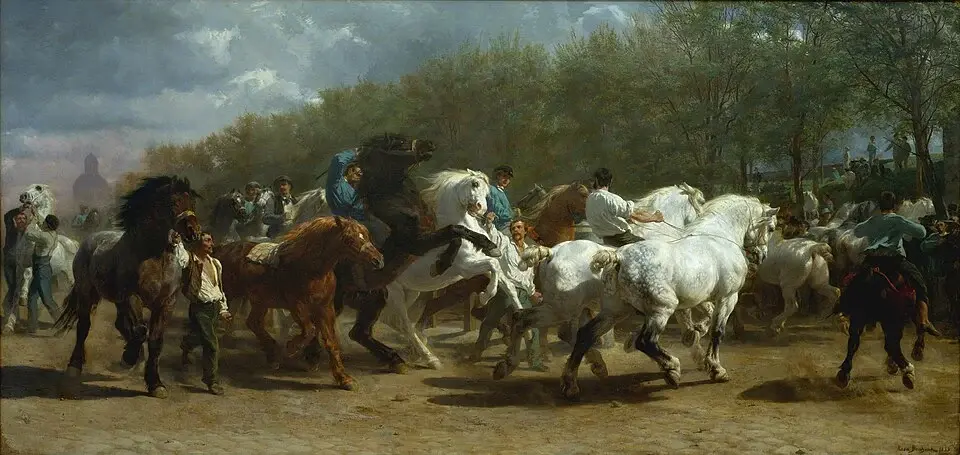
These Famous artists who drew animals studied the animals they drew and drew what they saw, with their talent and instinct.
Animal Drawing Mistakes and Solutions
Now, let's move on and talk about the most common mistakes that we artists make while making animal portraits.
Mistake 1: Drawing a Symbol Or Going For Symbolism
The Problem: When you are drawing an animal from memory, you are drawing it as a symbol, the image of what your brain registered. This can cause the drawing to be a bit generic or cartoon-like since a bit of detail is lost when you draw from memory.
Solution: Always draw what you observe; closely notice the shape. Be sure to show the proportions correctly from the head to the neck, chest to legs, or whatever you choose to measure, but it is crucial to take the angles and proportions.
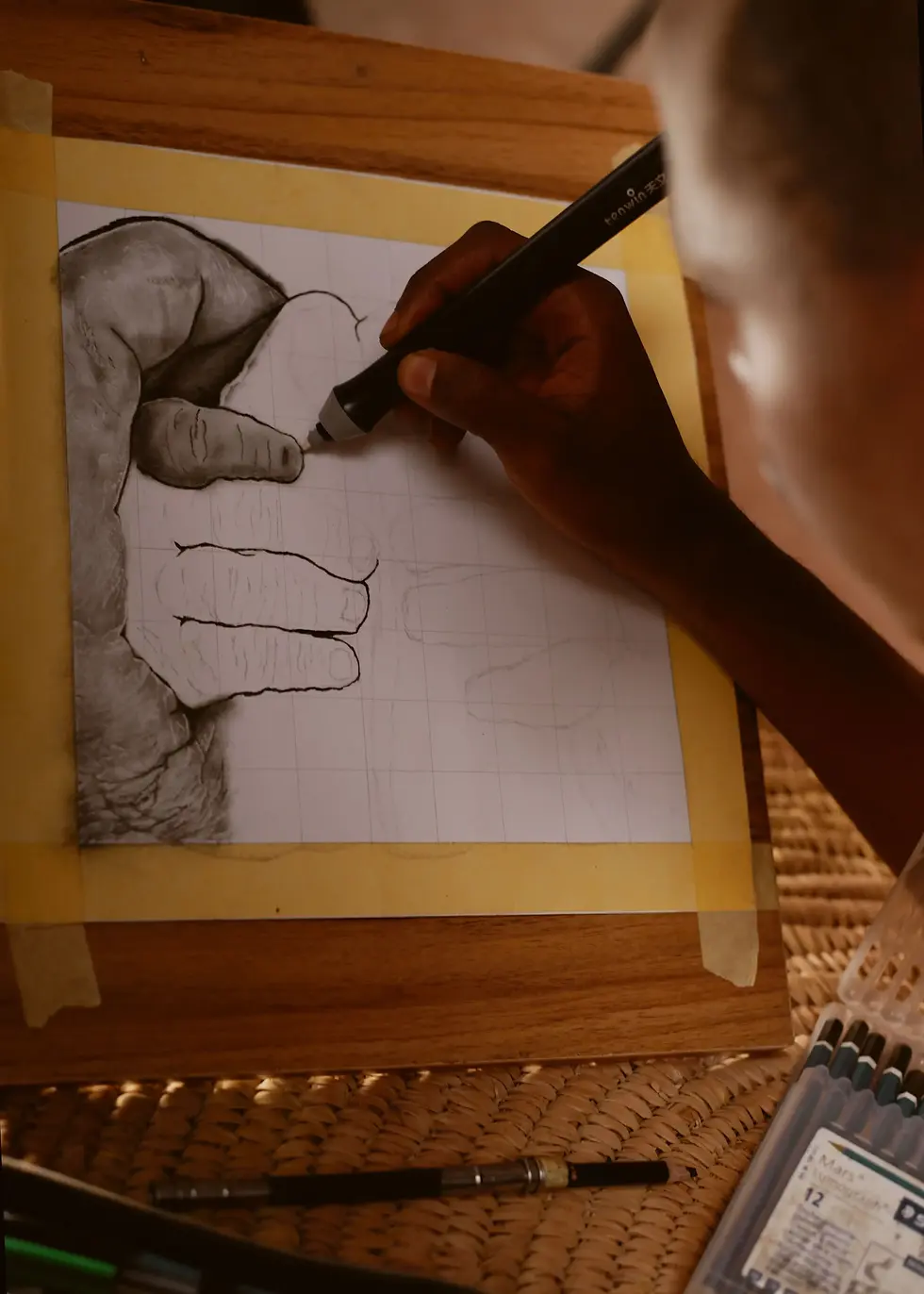
Hint: You would find it easy to draw an animal if you did so from an image. A grid will help you get the proportions right, and you can use it. Draw the grid with a light pencil so that you can erase it later.
You can also turn the reference image upside down so that your brain won't recognize the symbol, but the shapes.
Mistake 2: Disregarding the Skeleton and Anatomy
The problem: Animals' anatomy is very different from humans' and other species of animals. Different animals have different bodies. For example, a horse's knee is much closer in appearance to a wrist; hence, if you don't know the animal, the drawing or animal portrait may look skittish.
Solution: Always start with the basic structure. Just look at the skeleton drawings and figure out how the body structure is developed in a specific animal, and begin to draw.
TIP: Rough out the body first, and then add muscles or masses and the "outside" of the body.
Mistake 3: When You Draw Hair Too Early
The Problem: Many beginners will start drawing the hair, fur, feathers, or scales too early, which is a problem. They take lots of time on the texture, and the body itself is to be made completely.
Solution: Big to small; overall shape, main forms, light and shadow. The last step is to work on the texture.
TIP: If working on the fur of the feathers, think group, clump, not strands. Vary light towards edges and dark towards roots.

Mistake 4: Incorrect proportions and/or face.
The Problem: EYES SIT TOO HIGH OR TOO FAR APART. Muzzles don't go far enough. His head is too large for his body. These errors are most important when you are taking a portrait of an animal, since the face is the most important part of the animal.
The solution: Do not guess; measure. Compare other parts to the head, using the head as a unit. How long is the body? Distance between the eye and the nose?
The first lines to draw for faces are the eye line and the centre line. In most mammals, the eyes are located more in the middle of the head than is generally believed. Flip the image or squint and compare the picture to the photo. Typical mistakes are usually apparent.
Also, do not leave the eyes out. A bright highlight and a clear sense of the curve in the eye enliven a portrait.

Mistake 5: No movement and stiff poses
The Problem: When you capture a single picture to use for your animal drawing, they can seem lifeless. The outcome is a ‘stuffed animal' effect.
The solution: Take 30 to 60 seconds to draw the principal line of action—the arc that creates the shape of the pose. Do not get hung up on details. Capture the energy.
Go to a zoo, park, or farm and watch videos and stop them. Make a lot of rapid sketches instead of a long one. Ideal models, particularly when sleeping, as in the case of pets.
Read More: Top 4 Reasons That Make Animal Art Important
How Do I Get Better At Drawing Animals?

The first thing is to learn. If you study for the purpose of learning, then you will get better at drawing or, for example, at your job or basically anything. Practice drawing daily, and "the more you practice, the more you become perfect", and learn about the anatomy of the subject. Also, always check your work, compare it with your own past work, and determine where you went, what you learned, and what you need to practice more.
Apart from your friends and family, you can also get an opinion from a jury by participating in an animal art competition.
Summing Up
Animal drawing is challenging from the start, but it is also one of the genres that is loved the most. Simply because of the love for animals and love for art. As an artist, if you are also trying to get better at drawing animals in art, then here are the most important tips for you. Observe your subject closely, make the structure first, and add the details and the texture last.