_PNG.png)
Ukiyo-e as a Catalyst for New Western Artistic Paradigms

Updated: Jul 20
Rethinking the Arc of Art History
Within the grand narrative of global art history, it is often normalised to write about and establish a strictly Western pattern of artistic innovation: from the Renaissance realism to the modern abstraction, from the circles of the Parisian avant-garde to the global hegemony. That perception excludes one of the most radical and paradoxical influences on Western art: ukiyo-e, the distinctly Japanese system of prints and paintings that shook traditional conventions and contributed to the creation of absolutely new paradigms in the visual culture of the 19th- and early 20th-century Western visual culture.

Far from being an exotic curiosity, ukiyo-e profoundly inspired such movements as Impressionism, Post-Impressionism, and Art Nouveau by redefining the basics of composition, color, perspective, and subject matter, offering one radically different aesthetic language to Western artists who were desperate to break out of the strictures of academic tradition. This blog is an exploration into the way ukiyo-e served as both inspiration and catalyst that redefined the development of art in the West, hastening it at the same time.
To take this intended effect into consideration, we, to begin with, have to mention the origins of ukiyo-e and its aesthetics in the broader context of traditional Japanese art.
Defining Ukiyo-e: A Revolution Within Japanese Woodblock Prints
What does ukiyo-e mean, and when did it originate?
Essentially, ukiyo-e (“pictures of the floating world”) is a term that refers to a collection of artistic production based more on the artifacts of the Japanese woodblock prints, as well as paintings of the same sensibility. Ukiyo-e began in early 17th-century Japan but soon became the art form that was strongly established in the expressive culture of cities such as Edo (modern-day Tokyo), Osaka, and Kyoto.
As compared to the elite-oriented scroll paintings or aristocratic ink landscape styles of the previous periods, ukiyo-e focused on everyday life, theater, pleasure districts, traveling landscapes, and even erotic intimacy. They were made affordable and easily accessible: these images were printed in bulk and distributed very far and wide, and as such, they were the mass media of their times, and they contrasted with more courtly traditions of Japanese painting.
The actual technical procedure required a collaborative interaction between the artist, carver, and printer: the design of the artist would be worked out on top of a series of carved woodblocks, each inked and pressed until several layers of rich color and precise contour were achieved.
The results were images characterized by:
Bold, flowing outlines, more graphic than the subtle modeling of oil paint;
Flat areas of saturated color rather than tonal gradation or chiaroscuro;
Dynamic asymmetrical compositions, often cropping subjects to create surprising visual tension;
An integration of pattern and design as core visual elements.
The breakthroughs were a radical departure from the norms of traditional Japanese art, and it is these breakthroughs that would ultimately exhilarate the Western artisans.
Japan Opens to the West: Ukiyo-e’s Journey Abroad
It was not until the mid 19th century that Japan signed treaties with Western powers and was thus returning from self-exile, for more than 200 years. Western traders, diplomats, and collectors visiting Japan again discovered Japanese merchandise: lacquerware, silk fabrics, ceramics, and Japanese woodblock prints, chief among them all.
These pieces of art soon became a source of fascination in Europe. By the 1870s and 1880s, the prints were being imported into the galleries and salons of Paris and London, and collectors and dealers were bringing them in by the dozens. Japonisme was a term coined by a French art critic by the name Philippe Burty to explain the growing fascination of the European continent with Japanese aesthetics.
The style elements of ukiyo-e represented a galloping challenge to Western artists who were steeped in the traditions of academic realism and linear perspective, as well as in the veneration of a flat surface, asymmetry, and an expressive design rather than illusionistic depth and meticulous modeling, which stood in marked contrast to Western and even earlier Japanese painting traditions.
Composition Reimagined: Breaking the Constraints of Western Perspective
The compositional approach in ukiyo-e was also one of its most revolutionary aspects. The western artists were taught the tradition of the Renaissance and had long accommodated the pillars of pictorial space, mathematical perspective, balanced composition, and illusionistic depth. By comparison, the ukiyo-e prints have the effect of space flattening, foreground patterning, and neglecting geometric perspective.
The figures and landscapes in many of the prints by the masters, such as Katsushika Hokusai and Utagawa Hiroshige, are put in shallow planes which compresses the spatial depth and direct the viewer to the surface relationships rather than receding distance. Numerous works use strong diagonals, cut corners, and unusual placement of important motifs in them- techniques that Western academic art painters would have found subversive or even revolutionary.
This style appealed to Impressionist quarters in particular. Aberrant perspectives and cropping - often depicting figures partially clipped at the edges of the canvas - were directly reflective of ukiyo-e traditions employed by Edgar Degas. The landscapes of Claude Monet also adopted the surface patterns and rhythmic repetition of forms and focused less on the volumetric depth and more on the ornamental, immersive space.

Color and Surface: From Modeling to Expression
Tonal modeling and chiaroscuro had long been considered useful in traditional Western painting to portray the volume of objects in three dimensions on a two-dimensional surface. Ukiyo-e opposed this with its harsh, vivid colors to be applied in discrete zones without shading or gradient, which prefigured the expressiveness of color, and this created distinction from previous types of Japanese painting.
It was a success that led to graphic clarity and a colorful visual impact that was very compelling to Western artists. Vincent van Gogh, who also made a collection of ukiyo-e prints and greatly admired Japanese woodblock prints, wrote about them influencing his own style, and traced the effect in his application of extreme, unmodulated colors and expressive lines. Paul Gauguin also adopted flat color areas and strongly patterned surfaces in his explorations of mood and symbolic coloration.
Ukiyo-e led to the decoupling of color and the conventional models of color by giving new avenues of expression to Western art, where color became a structural element and was not merely used as a means to depict realism.
The Everyday Elevated: Transforming Subject Matter
Another radical departure in ukiyo-e was that it celebrated everyday life. Instead of devoting their attention to religious stories, mythic scenes, or aristocratic portraits, these prints were made of actors, courtesans, festivals, landscapes, and ordinary people. Their subjects were based on experience and popular culture, something that the western art had largely abandoned in favour of high themes.
Western artists were not long to take note. The works of Mary Cassatt, the American painter, working in Paris, included the scenes of women and children with sensibilities that are related to the ukiyo-e domestic intimate scenes; her compositions are centered around some of the daily gestures and relationships, and the flow of the pictures is dramatic and guided in the style of the Japanese woodblock prints. With the representation of ballet classes, Edgar Degas was able to bring everyday labour to fine art, in line with the episodic genre’s celebration of life.

Ukiyo-e broadened the thematic breadth of the Western artistic tradition by legitimizing commonplace subjects and hastening the Western art form in its movement toward contemporary life as an acceptable subject in art.
Beyond Painting: Decorative Arts and Modern Design
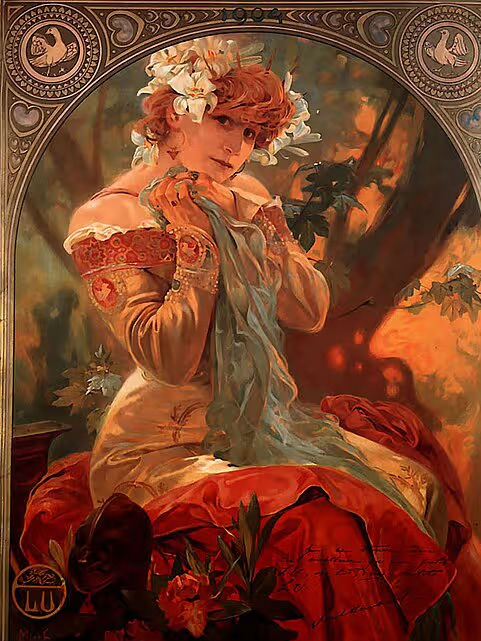
The influence of ukiyo-e ran well beyond painting into graphic art, poster design, and the decorative arts. Art Nouveau - an international arts style, which covered architecture, furniture, and illustration - greatly relied on Japanese compositional aspects, which include organic lines, asymmetry, and surface pattern. Ukiyo-e had a stylistic impact on textile and ornament design, as well as on the graphic poster in Europe, as the flat planes and linear motifs became a stylistic signature.
Japanese motifs were incorporated by James McNeill Whistler into the decoration of the rooms and graphic printed designs, and artists like Henri de Toulouse-Lautrec converted the graphic strategies to iconic theater posters by combining striking contours with dynamic color layers.
Therefore, the heritage of ukiyo-e not only served to be the canon of fine art, but it also supplemented the terminology of the applied and decorative art, serving to blur the distinction between the high art and the applied one, in the context of Western culture.
Lasting Legacy: Ukiyo-e in the Modern Artistic Imagination
The influence of ukiyo-e is felt in the visual culture of the world today. Its compositional advances, adoption of ordinary motifs, and renewed sense of color and design still shape the modern art and graphic practice. The history of Impressionism, Post-Impressionism, and the development of the modern visual image cannot be complete without references to the catalyzing role of these Japanese prints and their foundational place within traditional Japanese art.
Contemporary and modern artists continue to refer, remake, and honor the ukiyo-e guidelines either in a flat surface design of modern illustration, the graphic vibrancy of street art, or even comics and animation-based forms that touch on the heritage of the Japanese woodblock convention.

Conclusion: A Cross-Cultural Renaissance
The emergence of ukiyo-e as a central disruptive force in the development of Western art does not sustain a traditional account of linear and Eurocentric traditions of artistic development. These prints not only broadened the visual vocabulary but restructured it as well. Ukiyo-e introduced fresh notions of composition, color, subject, and surface, releasing Western artists from the air of academic formalism and making them adopt a pluralistic and modern aesthetic.
In that regard, ukiyo-e is not just a historical oddity but a testimony to the strength of artistic exchange. When separate traditions come together, they provide the fertile soil for innovation. During the transformation of Western art from representation to expression, Ukiyo-e exemplified itself as a redemption point between cultures and as a facilitant, a source of influence that is persistently pilfered by generations of artists across the globe with enduring success.
FAQ Queries
How did Ukiyo-e reach the West and influence artists?
As Japan opened up in the mid-19th century, ukiyo-e prints flowed into Europe and excited artists like Van Gogh and Monet with flat spaces, emphatic composition, and expressive design.
Why was Ukiyo-e revolutionary compared with Western art?
When Ukiyo-e artists illustrated everyday objects in two-dimensional colors instead of trying to capture depth and delve into realism, unlike the traditional Western arts, the movement forever influenced the modern movement in the West.
Is Ukiyo-e still relevant today?
Yes. The Ukiyo-e methods and aesthetics continue to influence contemporary illustration, design, and worldly artistic styles, and the prints are still read and recollected across the world.