From Thresholds to Canvases: The Ephemeral Geometry of Asian Floor Art

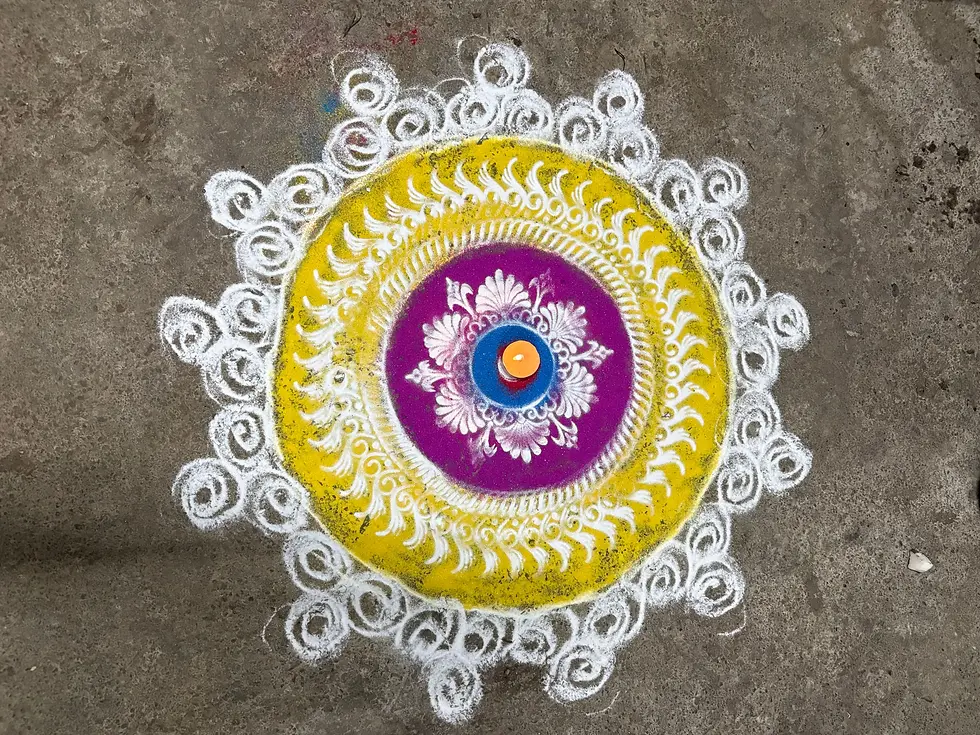
Before there were canvases, we had land and cave walls; people used to make art on them to communicate. Similarly, with time, the time came when the house walls and floor outside the house were decorated with complex designs to enhance the beauty of the approaching festival. Especially in asian households, women wake up early to sweep a patch of ground and make a beautiful floor art on it with dots, lines, and geometric shapes, simple yet beautiful.
The patterns took minutes or hours, depending on the length of the floor art design, and by the next day it was gone, but the point is simply being artistic. This is floor art, with no gallery, no signature, no price tag, and no long life. It is one of the most disciplined design art forms in Asia.
What is Floor art, and why does it count as Ephemeral Art?

Floor art is simply any art which is made directly on the ground. It is not the same as land art, though, we will look into the distinction in a later section.
Art on the floor is generally made in households during festivals, in courtyards, or on the ramps or land right outside the house.
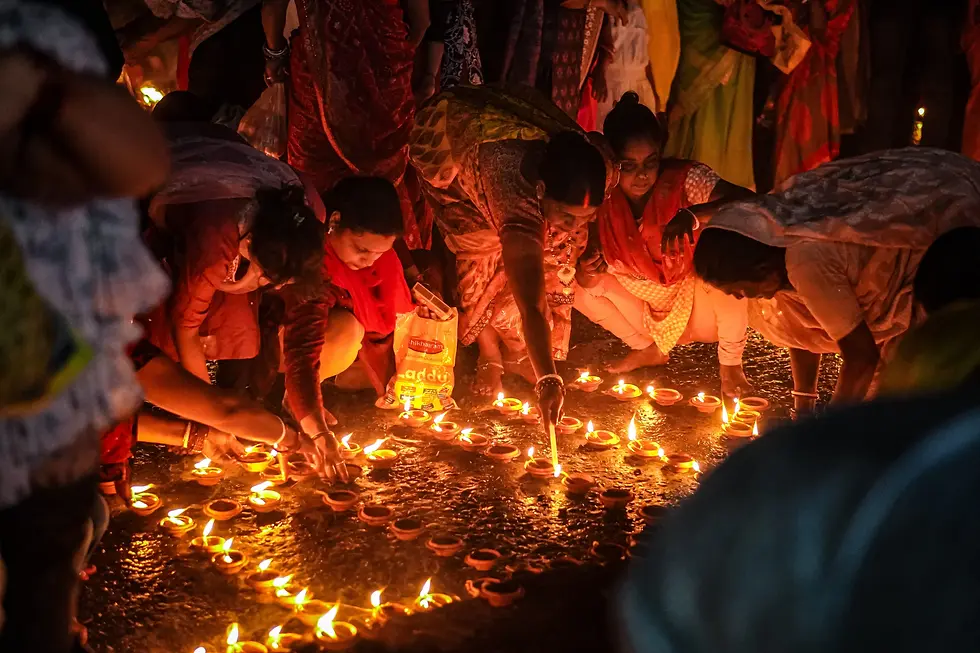
With the simplest materials, women make these floor art designs, like Kolam, rangoli, or mandala: rice flour, chalk, coloured powder, sand, or flower petals. Different regions across Asia use different materials and different designs. Like, in India, on the occasion of Diwali, people make rangoli from coloured powder and flowers.
This practice is often passed on from generation to generation. It is a living folk art tradition, and it is the perfect example of how to teach the young ones the art of letting go.
Since the art is made of the simplest materials, which are not permanent, the art goes away in a day or two, and this is what makes it ephemeral art.
The Beauty Of Floor Art As Ephemeral Art

Ephemeral art is any art that is made to live briefly. It is intentionally made that way, so that it is short-lived, and since floor art also goes away or deteriorates over time, it perfectly fits the definition of ephemeral art.
This is not just tradition; this is how it was supposed to be, although today, people use paint as well to make the rangolis and mandalas. However, traditionally, rice flour was used because it served a purpose as well. Rice flour was food for ants and other small animals, so the art served two purposes—beautiful asian floor art and a small act of giving.
Kolam And The Geometry Of Dots
Kolam is one of the famous forms of floor art which belongs to the Tamil Nadu region of India. This particular art form is famous for its mathematical side. In Kolam floor art, the designs are made of a grid of dots called “pulli”, which in Tamil means dot. The artist then goes on to draw lines that loop around these dots to make a beautiful and complex style. The line is continuous and closes back on itself; hence, it is a complex pattern to understand and draw, but very symmetrical, which makes it an elegant puzzle.
The Mathematics Hidden In A Doorstep Drawing
Kolam patterns are so beautiful and complex, with so much mathematics hidden in them, that researchers have taken notice of this floor art form and have studied its symmetry and science.
In the 1970s, a mathematician named Gift Siromoney and his colleagues analyzed the Kolam using formal array grammars in Chennai. They treated the art and drawings as a visual language with its own rules.
Some researchers have also compared the kolam art with sand drawing traditions, but the most striking part is that in the specific region of Tamil Nadu, this art form is not learned through any theory or by any teacher; it is observed by children. Simply, children observe their mothers making it, and they learn it that way, the mathematics living in their fingers.
Floor Art And Land Art Are Not The Same
People often get confused between the terms Land Art and floor art, and most often they think it's the same thing.
These two terms are interrelated but not the same. They differ in some parameters like the intent, the audience, and the scale of the art.
Floor art in Asia is a tradition since civilizations formed. Since they were passed from generation to generation, it is hard to say for sure when this tradition started.
However, land art emerged in the 1960s and 70s. Artists started using natural habitats like deserts and lakes to make art. Spiral Jetty by Robert Smithson is such an example of land art, which was made in 1970. This artwork is made on the Great Salt Lake in Utah. It is a 1,500-foot-long, 15-foot-wide counterclockwise coil which is made from black basalt rocks, earth, and salt crystals.
While land art is made on a large scale, floor art is made small in size and is generally made in the house, that is, in the verandah or at the doorstep of the house.

Materials: humble and local
Asian floor art is a traditional craftsmanship; it is not just art but something emotional. In its most basic form, before drawing, the ground is sprinkled with water to clean the area and so that the flour grips the surface. Then the chalk is used to add contrast and make the rough lines, and red ochre is used to give the earth a warm base. In some regions, only rice flour is used to make the design, while in many regions, coloured powder is used.
Other Floor Art Traditions Across Asia
Kolam is only one type of floor art; there are many other asian floor art forms which are known for their beauty and design:
Pookalam: This art form belongs to the Kerala region and is made from fresh flowers and leaves. They are often made in circles and on the occasion of the Onam festival.

Sand Mandalas: Tibetan Buddhists are known worldwide for their sand mandalas, which are made layer by layer and take days to make. When the work is complete and the mandala is made, they sweep it away and release the sand into the flowing water. This practice is done as a tradition to learn about impermanence.
Alpana: Freehand designs made with milk and rice paste are made during religious rites. It is a traditional Bengali folk art and is drawn on floors as well as on walls.
How To Draw A Simple Pulli Kolam?
You can try this floor art in your home as well chalk and rice flour. Start by sweeping the floor and cleaning it, then place a small grid of dots, like five in the first row, three in the second, and one in the last. Then draw a single line that loops around the dots without lifting the finger at all. You have to close the loop from where you began, so first it would be better if you make it with a chalk. The first attempt might look uneven, but if you practice a little, you will get the hang of it. The whole tradition is built on repetition.
Once you make the kolam, step back and check the symmetry. Both sides should mirror each other.
Final thoughts
Floor art starts at the threshold, but it represents much more —the tradition, the beauty in art, and the lesson of detachment. Its materials are simple and modest as well, something simple like rice flour, flowers, petals, and sand. The asians loves their art forms, but this particular art form is not praised as much as it should. So next time when you see a kolam, rangoli, or mandala art, see it as a design, a craft, and a gift from generations.