Asia’s November Festivals: The Art Behind Diwali, Tihar, Yi Peng, and Loy Krathong

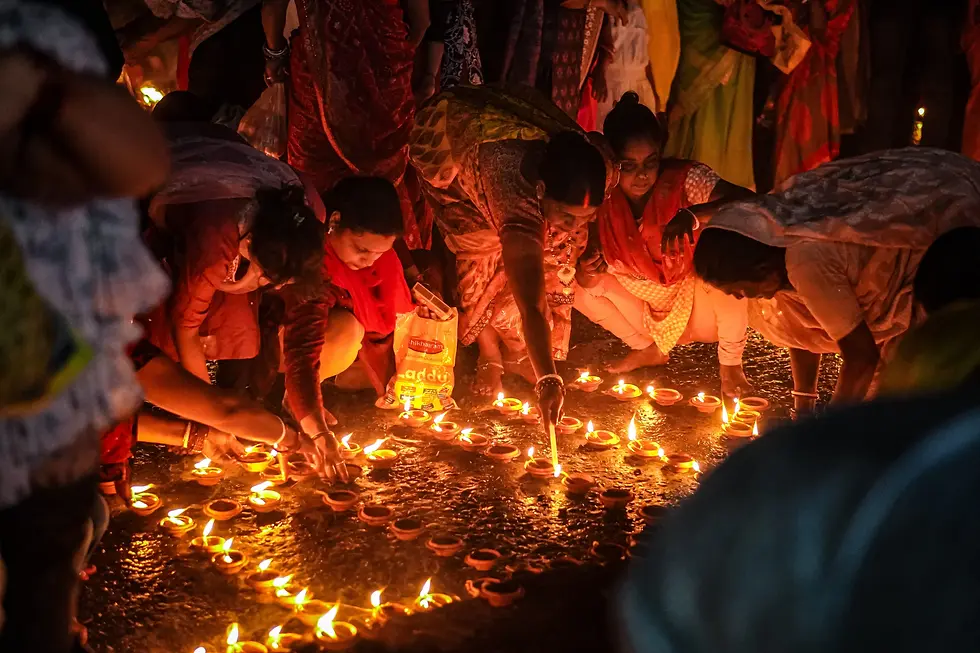
Every November, Asia becomes an open gallery. Go anywhere, whether it is India, Nepal, or Thailand, and you will see every house filled with love and laughter because this November is full of festivals. Festival art is full of colors, art, and craft. Diwali is the major festival of India, which will be celebrated on November 8. Yi Peng is a 3-day northern Thai festival, which will be celebrated from 24th Nov. 2026.
These are the times when you can see beyond just celebration. Festivals are full of art; in Diwali, people make Land art with colors called rangoli, Nepali homes are strung with marigolds in various designs, and the skies of Northern Thailand fill up with glowing paper.
In this blog, we will explore many festival art forms that are famous in Asia’s November festivals: the floor art, hand-built lanterns, flower installations, and floating offerings.
Rangoli and Kolam: Doorstep Floor Art and Land Art
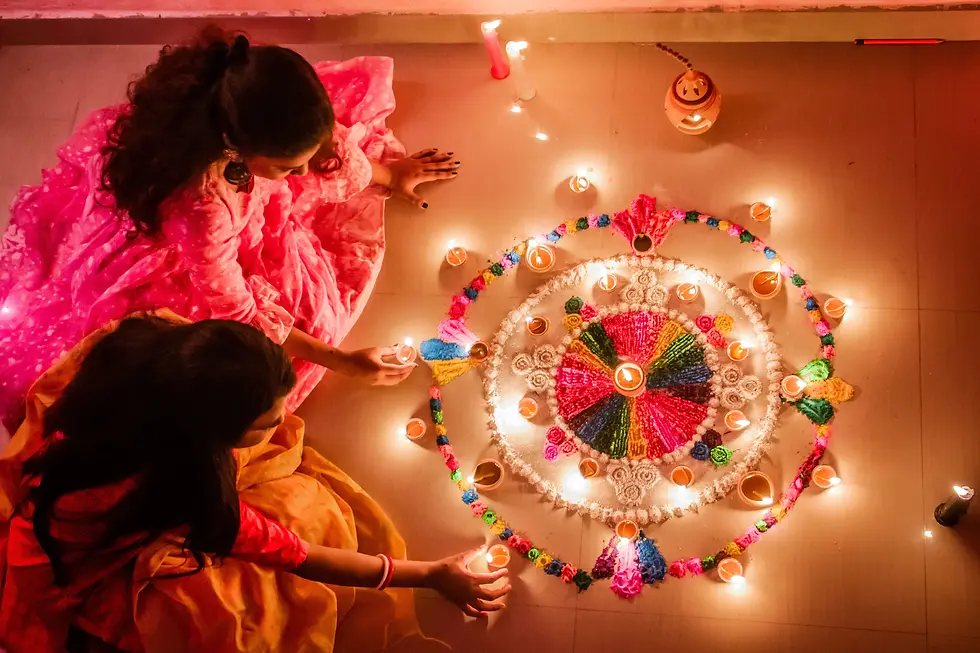
If you ask “What is land art?”, you will likely get a response that references artists of the 70s who are using deserts and fields to make art. However, for centuries, South Asian people have created works on the ground, outdoors, with no protection from the elements. The common version of the idea would be traditional Indian floor art.
Rangoli is the star of every Diwali, and in Diwali 2026 too, you will see rangoli designs made outside the houses on the floor using colors and flowers.
Colored powder, rice flour, flower petals, or sand are put into the design in all of India, at the threshold to welcome the goddess of prosperity, Lakshmi. The range of floor art is provided by regional styles:
Dot-grid designs in rice flour, made at dawn in Kolam (Tamil Nadu), are more akin to geometry than decoration.
Alpana (Bengal): patterns of flowing rice paste, lotus, and footprints.
Mandana (Rajasthan): paintings made on the floors and walls using lime and red ochre.
Muggu and Aripana are the cousins from Andhra Pradesh, Telangana, and Bihar.
These are folk art traditions which have survived in South Asia and are generally transmitted from mother to daughter by observation rather than teaching. In fact, there is real design thinking to be seen: complementary colours play, radials, repeating units that create rhythm. Then it's the next step, which is ephemeral art: feet and brooms change the design by morning, and that's part of the process, not a failure.
Did you notice? - Hours of creation, gone in a few hours; it was not just decoration and festival art; it was also a lesson in letting go.
Diwali Kandeel and Deepavali: The Art of Light

While rangoli is the land art or floor art, the Diwali kandeel is the art of the air. Kandeel, or qandil, means lantern. They are hung on the balconies and doorways. They are hand-made from paper or cloth and are used throughout India during the Diwali festival. With simple everyday objects like a wire or bamboo frame and colored paper, this beautiful artwork is created. The same patterns are being reworked today in brass, recycled material and LEDs – the old craft is being used in modern art at its most approachable.
Deepavali is also celebrated on 8th of November in Singapore and Malaysia. Little India becomes a place filled with oil lamps, colourful decorations, cultural events and markets to celebrate the victory of light over darkness. The quiet backbone of the whole show is the Clay diya, which is made in thousands by the potters every season.
Tihar in Nepal: Flowers, Footprints and Mandalas

The festival of lights in Nepal is Tihar, which is a multi-day festival celebrating crows, dogs, cows, Lakshmi, and sibling relationships. It's one of the more complex festivals regionally in its visual aspects.
The marigold and globe amaranth are woven to make garlands, and then they are used to decorate doors, shrines, and even animals. This art is more like textile art rather than floristry.
Indeed, small footsteps or prints in colored paste open up from the door, inviting the goddess to enter. In the colored powder, rice, and petals, floor designs are often inscribed in circular designs inspired by the mandalas.
Moreover, the Newar community also adds its own ritual art, such as Mha Puja, a mandala that is drawn to honor the self. The whole neighbourhood becomes an architecture of drawings with rows of lamps lighting the rooftops and courtyards. Pure, indigenous ritual art, flowers, flame, earth and colour, all handmade.
Important NOTE: The Tihar dates are based on the lunar calendar; please verify the dates in the local media before travelling.
Yi Peng: Light and Space Art Over Northern Thailand
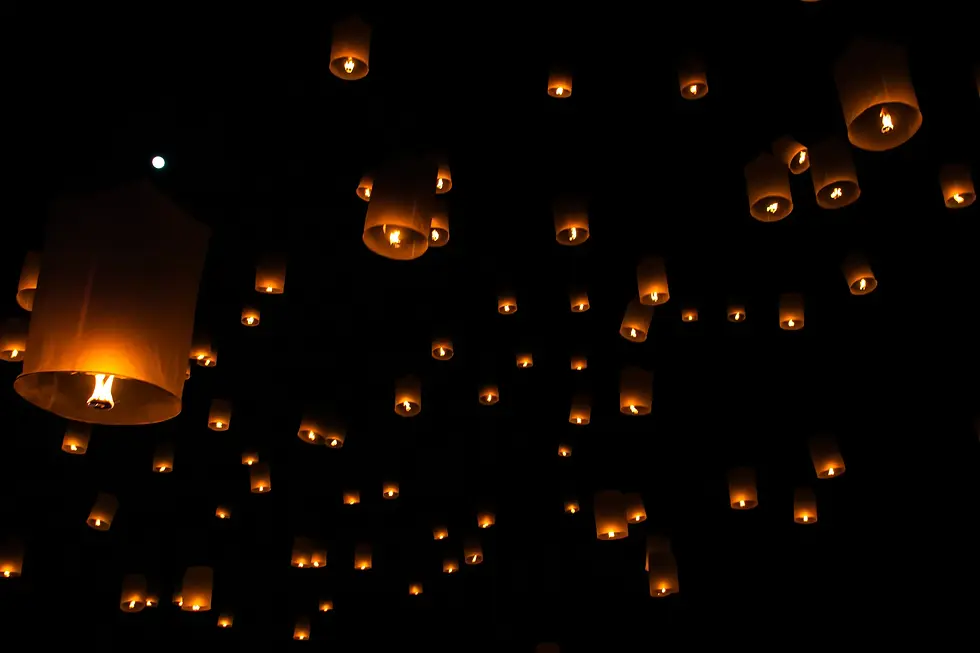
Lantern art is like a cinematic experience when you visit Thailand during the Yi Peng festival. The Yi Peng festival is a Lanna festival celebrated throughout northern Thailand, with the dates Nov. 24–25, 2026, and is most famous for the thousands of floating sky lanterns released.
The lanterns, or “khom loi” as they are called in the local language, are simple structures — a light bamboo frame with a translucent paper tube stretched over it.
When many lanterns are released into the sky, the sky becomes a canvas; it feels like space art. The entire community collectively becomes artists, and the sky witnesses that togetherness. The ritual is believed to get rid of bad luck and welcome fortune.
Practical tip: Sky lanterns are prohibited in certain locations for safety and environmental concerns, so always join organized and approved events and follow instructions.
Loy Krathong 2026: Sculpture That Floats Away
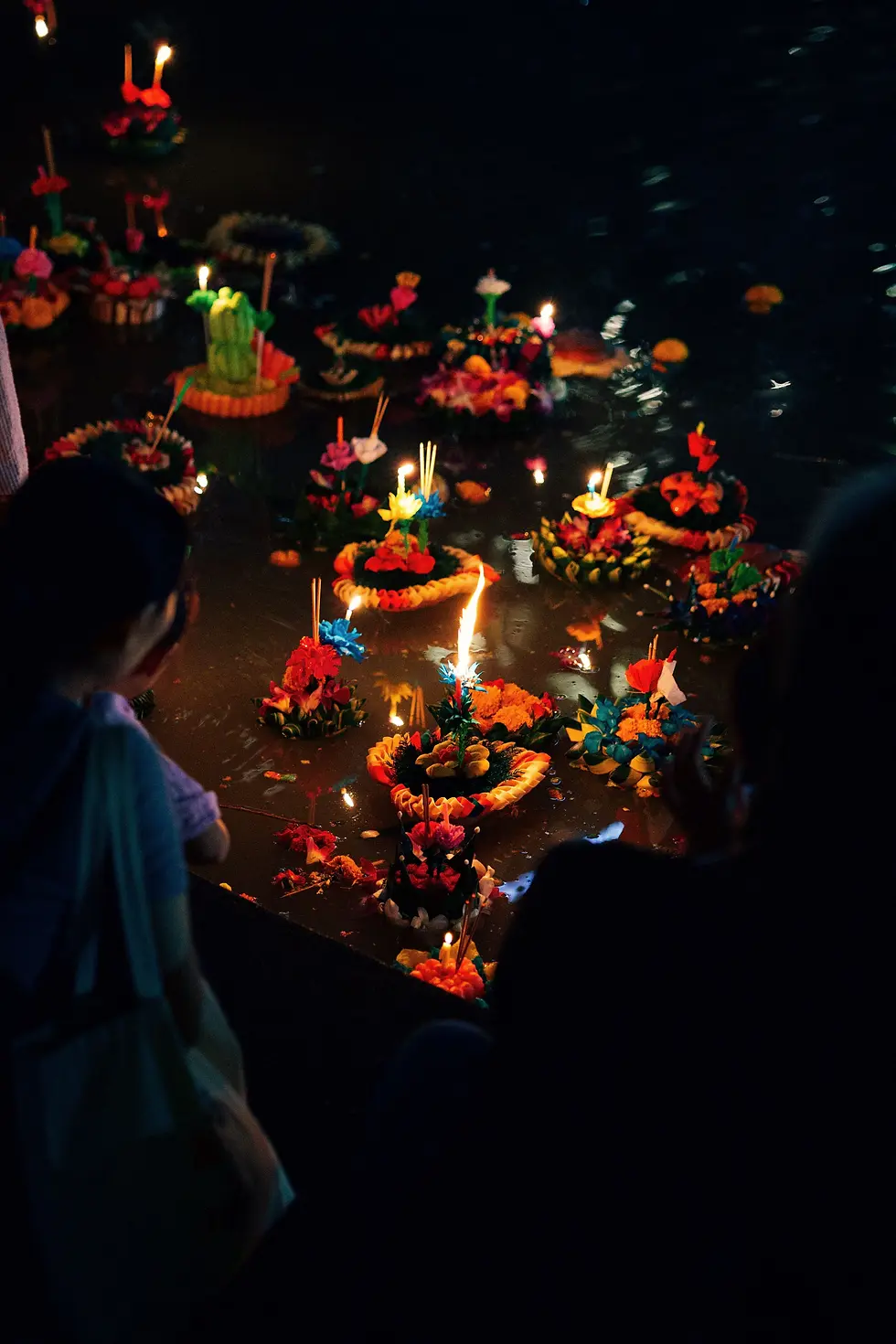
Loy Krathong 2026 will be celebrated on November 25 in Thailand. It is one of the most poetic art forms in which a Krathong is made and released on water. Loy means float, and a Krathong is a small vessel-type traditional object that is made of banana trunk and leaves, as well as flowers, incense, and candles.
The local creators are experts in making these, as they are made with precision by folding leaves into layers and petal-like crowns.
Hundreds of candle-lit offerings float together in water. This ritual is performed to welcome new beginnings and dispel negativity.
There are also large-scale spectacles held in Thailand during the festival. The Loy Krathong Light and Sound Show (date to be announced) puts the ruins of Sukhothai Historical Park, Thailand's first capital, into light through performance and storytelling. Vijit Chao Phraya River is a projection mapping event (date t.b.a.) that transforms the riverbank in Bangkok into a canvas for projection, illuminated landmarks, and fireworks. Indeed, the Kanchanaburi Kwai Bridge Week Festival is a combination of remembrance, displays, and light-and-sound shows.
More November Festivals Worth Knowing
This month's calendar is much more than just the headline events, and most of the events have a visual tradition at their heart:
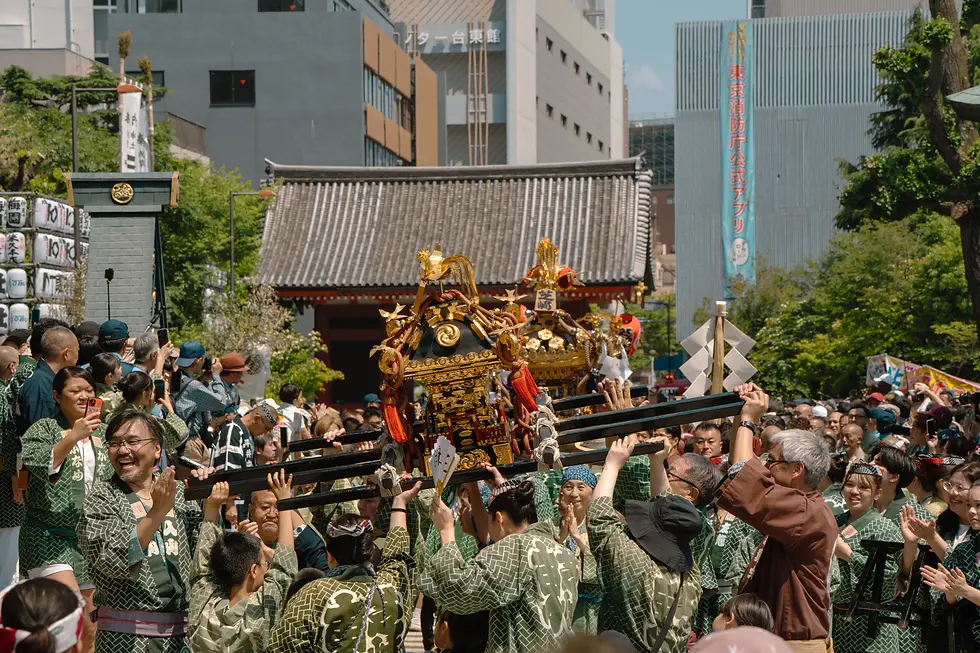
Daimyo Procession is a 200-strong parade of samurai, princesses and retainers who parade around the spa town of Hakone, Japan, as a moving exhibit of historic costume and textile craft from the Edo era.
Pagerwesi: The “iron fence” ceremonies are celebrated every 210 days on the Balinese calendar in Bali, Indonesia, in which ritual offerings are placed in temples. It is believed that the mind and spirit are strengthened through this ritual.
Bun Pha That Luang in Laos (Nov 5): The biggest fair in the country illuminates temples during the night and ends with an alms-giving ceremony at dawn for thousands of monks.
In Ooc-Om-Bok, Vietnam (Nov 22-23), the Khmer people celebrate the Moon Deity by holding colorful boat races and releasing lanterns into the air and onto rivers.
Bon Om Teuk: At the end of the rainy season, long boats are engaged in races in Siem Reap and Phnom Penh, and many smaller events are held in regional capitals in Cambodia (Nov 23 - 25).
Lopburi Monkey Banquet, Thailand: It is an unusual sight in Thailand to see the residents of the town of Lopburi serving a culinary feast to a troop of resident macaques around the Phra Prang Sam Yot temple (Nov 29).
Craft, Community and Shared Experience

There is a silent chain of capable hands behind every display - the bends of the bamboo for the lanterns, the clay being turned for making diyas, weavers stringing marigolds, the powder churned to make rangoli. It is the most literal material culture of objects that communicate with us about climate, belief, economy, and family. Purchasing from these producers ensures the continuation of the skills.
It is also free of commission, plinth, and label: it is public art. The rangoli is created by the house owner. Whoever shows up for the festival performs a lantern release. Thousands of people gather together in a river full of krathongs. The entire city becomes the painting for a couple of nights!
Visiting Respectfully!
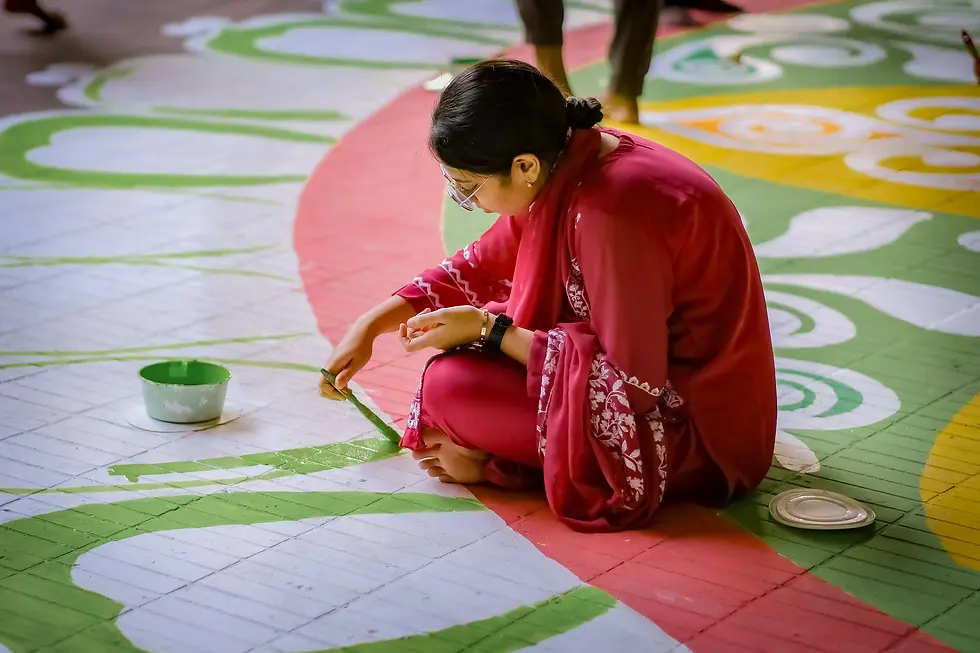
Do seek permission for photographing rangoli in front of private houses.
For the Krathong, it would be better if you follow the locals and use leaves, flowers, and banana trunks, as they are biodegradable.
To support the local artists, buy lanterns, diyas, and garlands from the locals as well; they will charge you appropriately.
Steer clear of stepping on a rangoli, unless asked to do so.
Final Thoughts
The festivals in November in Asia are quite different visions of what art can be: ephemeral, communal, and constructed of lowly stuff, but powerful. Rangoli's lessons are that beauty doesn't require permanence. Kandeels and Yi Peng lanterns demonstrate the sculptural effect of light. Tihar shows how devotion can be an installation, and Loy Krathong reminds us that letting go is an art form in itself.
Our world is so full of love and togetherness, as well as art, and these festivals clearly indicate that.