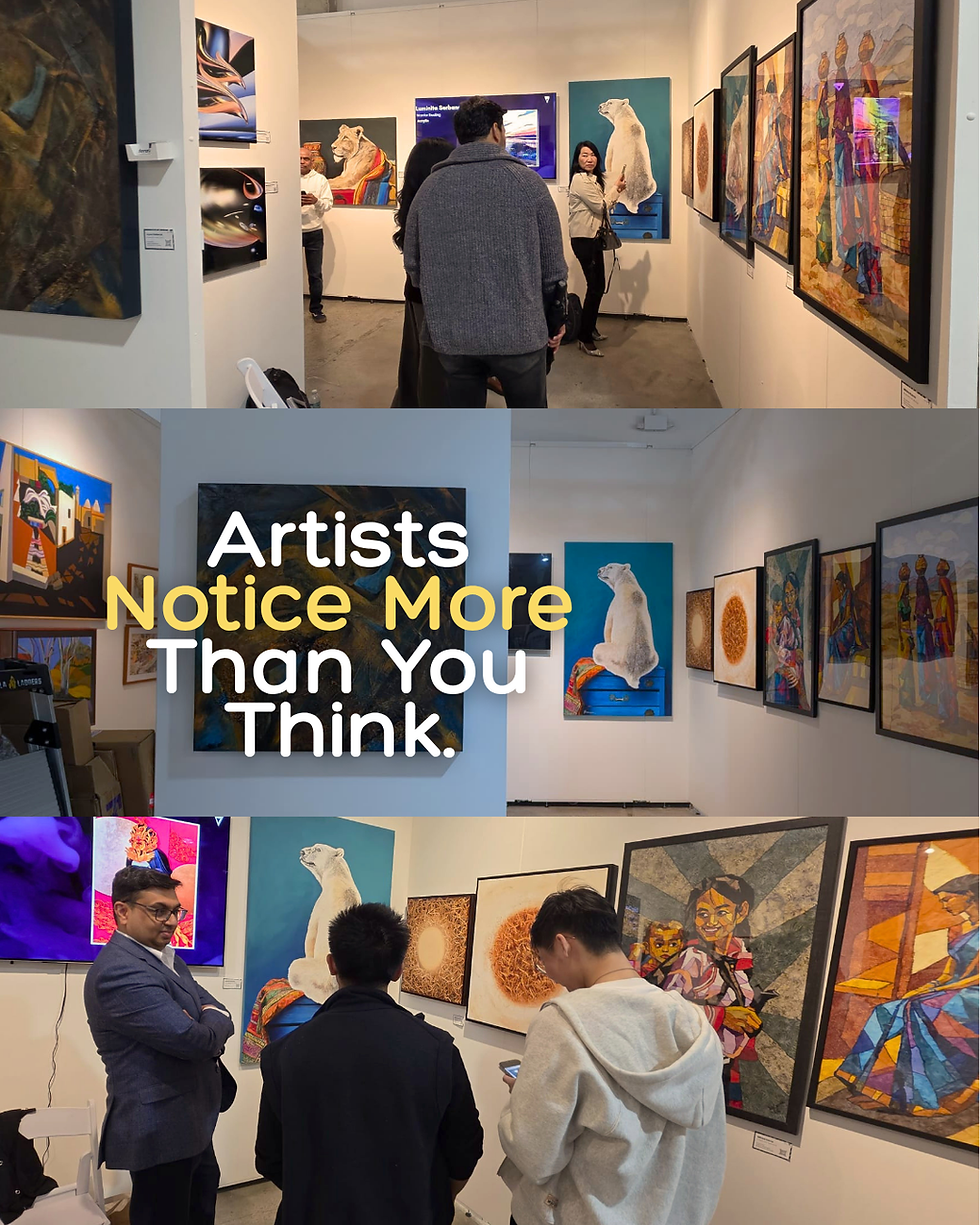
_PNG.png)
Are Art Galleries Building Cemeteries Manned by Gatekeepers?


OK, I’m going to say this out loud. Most commercial art galleries today are more like curated snobbery than— well, art. It’s also about who you know, what you look like, and where your friends come from.
I can’t deny I myself had some success a decade ago showing my work in New England, New York, even Paris. But then life had gotten in the way, and I learned that when you stop, the algorithm forgets you ever existed.
By 2019, I was picking up, however, living for the third Friday—a monthly art event in downtown Phoenix where I’d show and sell my work. I started to feel like I was stepping out of invisibility.
Then — suddenly — the world stopped.
My monthly art ritual vanished overnight. Locked down, it was then that I realized the traditional gallery model was not just broken—it was a burial ground for emerging talents. I tried to find a reliable platform that gives the unknown artist a voice. I couldn’t—so I decided to build one myself.
I launched TERAVARNA with one heretical idea: anonymity is king—online, your skin color, looks, and personality are irrelevant. What’s celebrated is your talent. My first open call was free—and over 300 artists crashed during that weekend. A chemistry professor by day (I was teaching online at the time), by night, I was coming to a realization that if I didn’t become the voice for those "unproven" artists, their work would stay hidden long after the world came out of this lockdown.
Today, what seems controversial to many has been a time-tested truth to me—success in the art world comes from surviving the gatekeepers who want you to fail so their own investments won’t.
This is why to this day, while I never promise artists their work will sell, I do promise to give them a fair chance. To see them. And most of all, to listen to them patiently. Always.
And so, the journey continues…