_PNG.png)
Transformative Power of Art - How Creativity Changes the World!

Updated: Jul 22

Art is power, and power is art. Art is just creativity, but we can all sense very easily how much impact it makes. Art is about surrender; it is about how you see yourself, your life, and how you read it.
Art is the epitome of life; what is life without art?
The power of art can shape societies, make norms questionable, and inspire progress. From cave paintings to digital installations, creativity has been the process of making sense of the world and redefining its possibilities by people. The power in art is so much because art is not limited by language, space, or culture and turns out to be a universal way of communication and transformation.
Through this blog, we will discuss the representation of power in art, the way art transforms the world in terms of its reflection, social cause, innovation, and human connection.
Art as a Mirror of Society
Art has always reflected cultures, exuded values, and reacted to events. There were survival stories, masterpieces of the Renaissance period, which glorified the human potential, and the political outcry of the modern street art. Artists make society look into a mirror — a mirror that reflects both sides of life, the beautiful truths and the naked truths.
Historical Case: Case in point, have a look at Guernica, a 1937 artwork by Picasso that reflects a statement against war. It shows the atrocities of the Spanish Civil War.

Contemporary Analogy: Street artists use the street to get their message to the world. For instance, Banksy was an artist who used street art to criticize the problems of consumerism, inequality, and political corruption.
Art aids communities in dealing with unpleasant realities and dreaming positively about the future by mirroring society. Mostly, the power of art comes out in an artist in exile. Take Van Gogh, for example; the best works that he made were when he was in a mental asylum. Read more about his story here—The Unfamiliar and Unusual Van Gogh: Before the Sunflowers Bloomed
Art in Action as a Social Transformer
Art does not simply manifest; it mutates. It can mobilize, inspire, and unify people.
Civil Rights Movement: Civil Rights songs such as “We Shall Overcome” came to be the hymns of perseverance and unity.
Feminist Art: Artists like Judy Chicago criticized the patriarchal order with art pieces like “The Dinner Party."
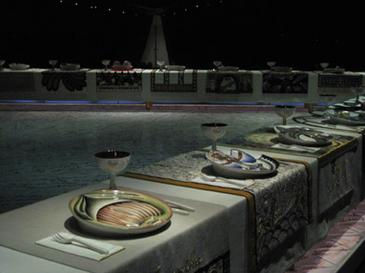
Protest Art Today: Cities all over the world are making their voices heard through the messages of Murals and installations to take action on climate change and racial justice, as well as gender equality.
Black History Month: Black artists stand against discrimination, confronting systemic racism. They amplified their voices that history tried to silence and celebrated humanity and individuality.
Art appeals to feelings, initiating the discussion and compassion, which are the key to a long-term transformation.
The Power in Art for Creativity and Innovation
Art drives innovation through experimenting and imagining. Artistic thinking has given rise to many scientific and technological advances. Art is everywhere, and the power of art lies in us, whether we are
Architecture: There is art in engineering. The very basics of architecture are drawing. It has brought us the wonders of the world, like the Eiffel Tower and the Taj Mahal. Especially if you see thousands-of-years-old Indian structures of temples, you will be in awe.

Medicine Practitioner: Even in medicine, art plays a role. Especially in cases of mental trauma. Doctors suggest art therapy all the time to heal stress and trauma, to improve a patient’s mental health. They suggest that using art to communicate their inner feelings will help them get rid of all the burden they are hiding inside.
Teacher: Teachers use art and craft to bring the best out of their students, to teach them complex methods. I definitely see art in the Fibonnaci sequence. And have you heard about “The Vitruvian Man” by Leonardo da Vinci, the figure that shows the ideal human body proportions.

Creativity takes risks, as it serves as a reminder that development usually starts with a bold enough idea to think the unthinkable. And history has shown us again and again, the world will always be incomplete without the power of art.
So, I think it's safe to say that art transforms education and learning, too.
Art as a Universal Language
The representations of power in art are through every brushstroke and every shade. Art is able to cross boundaries, not only between the states or countries, people of different cultures, or between reality and imagination, but also in emotions. It can show you the power of emotions.
Art can speak to you without translation. A painting, song, or dance can make people feel something everywhere and empathize and connect.
Music: Beethoven's symphonies are able to cross over centuries and cultures. People in the UK are dancing to Bollywood songs. Different cultures across the world celebrate Christmas with such joy, singing Jingle Bells.
Film: Films, such as Parasite (South Korea) or Slumdog Millionaire (India/UK), do not conform to any specific culture and generate worldwide discussion.
Digital Art: Social media has enabled artists to distribute their art immediately, forming creative communities across the world.
This commonality elevates art to be a source of sharing between different people, spreading knowledge in a disjointed world.
The Healing Power of Art
Art is not only something that changes society but also something personal. This is the best power of art; it gives a sense of comfort. Indeed, art helps us communicate something we might say in words. It heals something in us.
Even if you are not an artist, art is still inside you; it's always a part of us.
Looking at a painting, taking in its strokes, colors, and even its frame, will definitely change something inside you.
Some of the widely accepted art forms that you can see nowadays are:
Art Therapy: Art therapy is applied widely for therapeutic practices. It is believed that it helps people to manage their emotions and can reduce or help control trauma. Indeed, these days, face and body painting is also very trendy.

Community Projects: Building an art community is very common these days. People come together to learn and do different things, including any form of art, whether it is painting, embroidery, or pottery. It builds stronger bonds between them and enhances cognitive skills as well.
Individual Creativity: Creativity has no bounds, and art is not restricted to painting or drawing only. Even journaling and making music are art, and so your creativity is yours only. You can choose any art form; it will alleviate stress and improve well-being. That's how much power of art can change your life.
In a world where speed and productivity tend to dominate, art tends to make us stop and think and to reconnect with ourselves. It teaches us patience, makes us feel, and challenges us to be ourselves.
Challenges and Responsibilities of Art
As much as art is powerful, it is responsible. When abused, it may propagate propaganda or promote bad stereotypes. Artists and spectators should also be conscious of the power of art.
Propaganda: The art has long been used by totalitarian governments to suppress narratives.
Commercialization: Too much emphasis on profit will make art lose its originality.
Accessibility: The question of making art inclusive and accessible to everybody is a challenge.
It is the recognition of these challenges that will make art remain a power of good.

Summing Up
Art is the best tool of humanity.
Art has a transformative nature, which can inspire, connect, and change. It is a mirror of society, pushes innovation, fixes people, and makes societies closer. There is no luxury to creativity as it is a necessity of human development.
With the world issues, including climate change, inequality, and technological disruption, art is providing hope and vision. It puts in our minds that imagination is the initial step in transformation.
The power of art not only transforms the world, but it also invents the world on a daily basis.