_PNG.png)
Ephemeral Permanence: The Paradox of Tattoos as Both Permanent and Changing Art

Updated: Jul 20
Tattoos are something deceptively simple. They are frequently characterised as indelible marks that remain with us all our lives, imprinted into our skin as symbols of identity, memory, and/or self-expression. But this apparent permanence is only partially true.
In truth, tattoos are one of the most volatile "permanent" artworks present. They fade, blur, stretch, and transform, both physically and emotionally. Tattoo art is unique in that it is permanent in form and yet ephemeral in experience.
This is what defines body art at its most complex. It is not just something we wear, it is something that changes with us.
The Paradox at the Core of Tattoo Art
At the heart of tattoos lies a contradiction.
On the one hand, tattoos are meant to be permanent. Tattooing is a deliberate act - people choose to wear images with the belief that they will represent them indefinitely. Yet, no tattoo remains unchanged. Permanence doesn't mean stillness.
This is where the idea of the ephemeral tattoo is significant. The tattoo doesn't disappear, but it doesn't stay fixed. The edges become blurred, it becomes less clear, and its meanings change.
In art theory, permanence is often associated with stability. However, tattoos challenge that notion. It brings a new kind of permanence that is in perpetual motion. Here, the notion of the ephemeral tattoo is important. It's not transitory in existence, but transitory in form.
The paradox is simple yet profound: tattoos are permanent marks that refuse permanence.
Why Are Tattoos Considered Permanent?
The permanence of tattoos is rooted in biology, not just cultural belief.
A tattoo is formed by repeatedly puncturing the skin with needles thousands of times per minute to deposit ink into the dermis, the layer beneath the epidermis. This depth is critical. The epidermis sheds continuously, whereas the dermis is more stationary, and this is why the ink doesn't simply fade away with skin turnover. This allows tattoo art to last for years.
However, permanence is not simply about depth; it is about the body’s response. Ink is seen as a foreign substance by the immune system, and cells known as macrophages are sent to engulf it. The cells are unable to break down the pigment, so they hold onto it. As these cells eventually die off, they are replaced by new cells, which reabsorb the ink, allowing the process to repeat and for the tattoo to last.
This process makes body art biologically stable. But stability does not mean immutability.
The Living Canvas: Why Tattoos Change
Even though the ink remains, the surface it rests on is constantly evolving.
Human skin is alive. It stretches, contracts, heals, and ages. The protein that gives skin its structure, collagen, begins to deteriorate, and the skin's elasticity and firmness change. This, in turn, affects the way tattoos look.
Meanwhile, the body's immune system continues to interact with the ink. Micro-particles may gradually degrade or shift slightly in the dermis, affecting the coloration over time. So, every ephemeral tattoo is the result of an ongoing biological dialogue. The body is not a passive surface; it is an active participant in the artwork.
A tattoo, therefore, is never frozen in time. It is always in transition.
How Tattoos Transform Over Time
The transformation of tattoos happens gradually, often so subtly that it goes unnoticed until years have passed.
The most obvious changes are the blurring of the lines. After a certain period of time, pigments can migrate in the dermis, resulting in blurred edges and loss of detail. This phenomenon can be called ink migration and is responsible for the "aged" appearance of older tattoos.
Aging is also a major factor. As skin loses elasticity and begins to sag or wrinkle, the design on top of it adapts to these changes. An image that was once defined might take on a less rigid and more flowing appearance.
Environmental factors also influence a tattoo's evolution. Exposure to ultraviolet light, for instance, damages pigment and skin condition, resulting in loss of color. During everyday movement, when areas are exposed to friction, such as our hands, feet, or joints, distortion also occurs.
These changes do not destroy body art. Instead, they reshape it, giving it a history.
Time as an Artistic Medium
In most art traditions, time is something to resist. We preserve paintings, conserve sculptures, and archive photographs to keep them from deteriorating. But tattoo art is different. In this case, time is not an external element; it is intrinsic to the medium.
A tattoo is created with the knowledge that it will age. It will move through years, accumulating changes that reflect both the body and the life lived within it. The fading of pigment or the softening of lines is not merely decay; it is transformation.
Some contemporary tattoo artists even design with this in mind.

For example:
Bold traditional tattoos use thick lines to age better
Fine-line tattoos intentionally embrace softness and fading
Watercolor tattoos mimic the look of pigment dispersing over time

This makes tattoos uniquely temporal. They do not exist outside of time; they exist through it.
Tattoos as Moving Images
A defining feature of tattoos is that they are in motion. Tattoos are dynamic, unlike other traditional art forms, which are static. They expand and contract with muscles, move subconsciously with posture, and respond to every movement of the body.
A shoulder tattoo is distorted when the arm is lifted upwards. A rib tattoo moves with breathing. Even small fluctuations in body composition, such as weight gain or loss, can affect the appearance of a tattoo.
This makes body art inherently dynamic. It is not just an image; it is an image that performs.
Changing Meaning: The Inner Transformation
Tattoo transformations are more than just physical. It also transforms psychologically. A tattoo can start as an expression of identity, linked to an event, feeling, or life stage. It may symbolise loss, a relationship, or rejection.
For example:
Polynesian tattoos encode genealogy and status
Japanese irezumi reflects mythology and personal values
Prison tattoos often signify affiliation or experience
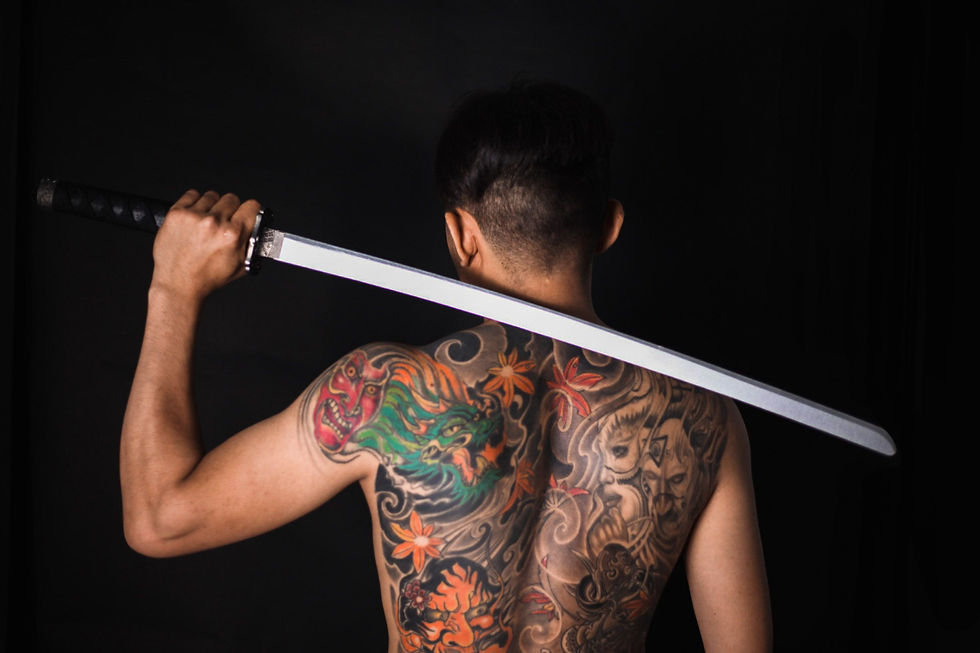
Yet meanings are dynamic, even in contemporary times. An attachment for a person may transform into growth. An emblem of trauma can come to symbolise resilience. Even impulsive tattoos may be imbued with new meanings over time.
This is the greatest significance of the ephemeral tattoo. It symbolises not only the changing of the body, but the changing of the self. So tattoos can be seen as records of growth and development, of the past and the future, and they become living narratives.
Tattoos as Process, Not Product
Traditional art can often be defined by completion. A painting is complete. A sculpture takes on a definitive shape. But tattoo art stifles this notion.
When a tattoo is inked, it does not end but begins. It will change with time as a result of biological, environmental, and emotional factors. Tattoos are therefore more about processes than objects. They are perpetual, unfinished, and in a continuous process of change.
Even interventions, such as touch-ups, cover-ups, and laser tattoo removal, are eventually part of the process. Laser is effective because it breaks the ink into fragments that are, at last, removable by the immune system.
It's important to recognize that a tattoo is never "complete". Doing so is simply misunderstanding its nature. It is always becoming something else.
Negotiating Permanence in Modern Tattoo Culture
In contemporary culture, even the idea of permanence in tattoos is becoming more flexible.
Touch-ups allow individuals to restore faded designs or refine details. Cover-ups transform older tattoos into entirely new compositions, layering one piece of body art over another. Laser removal has further complicated the concept of permanence. Breaking down pigment particles into smaller fragments, it enables the body to gradually remove the ink.

This means that permanence is no longer absolute; it is adjustable. The ephemeral tattoo is no longer just a philosophical idea. It is a practical reality.
Tattoos vs Traditional Art
What sets tattoo art apart becomes clear when compared to traditional forms. A painting exists outside the body. It can be preserved, restored, or displayed without changing its fundamental nature. Its surface remains stable.
Tattoos, however, are embedded within the body. Their surface changes constantly. Their meaning evolves with the person who carries them. This makes body art one of the most intimate and dynamic forms of expression. It cannot be separated from the life it is attached to.
Contemporary Relevance: Embracing Change
Modern tattoo culture increasingly embraces the fluid nature of tattoos. Fine-line designs, for example, are often created with the understanding that they will fade more quickly. Rather than resisting change, these styles incorporate it into their aesthetic. Artists are also experimenting with new techniques and materials that highlight impermanence, challenging the traditional idea that tattoos must remain bold and unchanging.
There is a growing awareness that tattoo art is not about preserving perfection; it is about participating in transformation. The ephemeral tattoo is no longer a contradiction. It is a reflection of how people now understand identity itself: flexible, evolving, and deeply personal.
Conclusion: Art That Lives and Breathes
Tattoos challenge our understanding of what it means for something to last. They are permanent in presence, but ephemeral in experience. A tattoo does not remain the same. It becomes what time makes of it.
They blur the line between object and process, between art and life. And that is precisely what makes tattoo art one of the most human forms of body art, an artwork that lives, changes, and remembers.