_PNG.png)
Gustav Klimt Paintings: Gold, Cat Urine, and the Strange Genius Behind ‘The Kiss’

Updated: Jul 27

For ages, we have been fascinated by the masterpieces of great painters, sculptors, and visionary artists. But we hardly probe into the process of art making or visit the places where these great pieces are born or take shape from raw to real.
Imagine walking into one of the famous art studios of a celebrated artist back in the 1900s.
This is the best place to peek into how artists organize their work or to understand their source of inspiration, like who their muses are.
Instead of polished floors and neatly done canvases, you come across some scattered sketches, a pile of unfinished drawings, loose robes hanging by the door, and most strikingly, cats roaming freely, running wild through the sketches, and peeing on them as well! You meet an artist who refuses to dress like others. Would you feel incredibly amazed by what you’ve just witnessed?
Think of this artist as none other than Gustav Klimt, the famous Austrian artist, known for his ornate portraits and gold leaf paintings like ‘The Kiss.’
In this blog, we will explore some fascinating stories about this eccentric genius—his messy art studio, his symbolism, the scandals about his artistic and private life, his affinity for cats, the ban on Gustav Klimt paintings, art heists, and myths surrounding this talented artist.
Who Was Gustav Klimt: A Genius Never Fully Uncovered

"Whoever wants to know something about me—as an artist, the only notable thing—ought to look carefully at my pictures and try to see in them what I am and what I want to do." – Gustav Klimt
Revisiting Gustav Klimt is almost like looking through a prism, revealing a wide spectrum of colors.
He was unconventional, he was eccentric, he was a rebel, and he is the most talked-about Austrian symbolist painter to this day.
Klimt was the founder of the Vienna Secession Movement (the Wiener Sezession) in 1905. A group of painters, sculptors, and architects diverged from the art conventions and marked the dawn of a modern approach towards artistic freedom in Austria. They were influenced by the avant-garde, the new artistic movements across Europe.
Millions of art lovers admire 'The Kiss’ for its golden sheen, sensual appeal, and romantic symbolism. But rumors and gossip never left this genius of the Vienna Art Nouveau style—he defied artistic forms and conventions, which almost shocked and stirred the elite society of Vienna.
Klimt paintings challenged artistic traditions, leaving his signature behind to captivate the world, even today.
The Shabby Secret of Gustav Klimt Behind the Glamorous Gold Leaves
Behind the height of gold and glamour, what was the shabby secret of Gustav Klimt's art?
The artist known for his luxurious gold-plated artworks shared his studio with a group of cats! He worked in a secluded, chaotic environment where entries were strictly prohibited for anyone visiting his studio except for his models and art buyers.
The Austrian symbolist painter and Art Nouveau artist was known for his decorative style, flatness, and ornate designs, but what lay underneath was dark and shadowy.
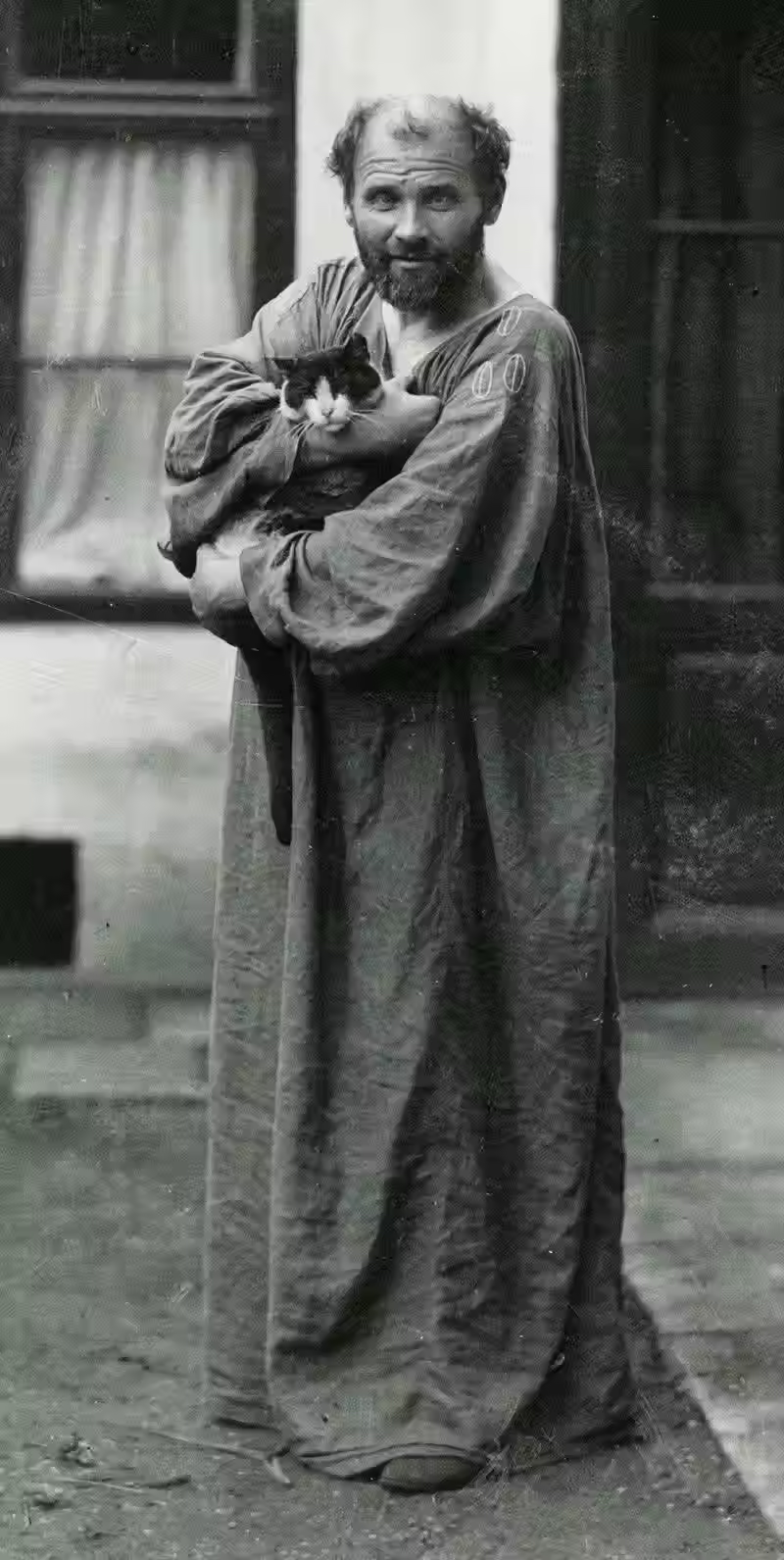
His real life was far from glamorous and tidy.
He lived with cats, painted portraits of women as a notorious womanizer, and fathered 14 children from numerous love affairs without ever getting married. He produced erotic drawings of nude women that stirred the sophisticated Viennese society.
He revolutionized the use of gold in paintings, reserved for church paintings and royal portraits until then. Klimt transformed this elegant, lustrous material into his artistic signature to paint explicit eroticism. This was indeed radical in art history.
Besides, he was exposed to metalwork from an early age, as his father used to do silver and gold engravings.
Klimt and His Femme Fatales and His Famous Blue Caftan
"I am less interested in myself as a subject for painting than I am in other people, above all women.” – Klimt
Controversy and scandals surrounded this shy and reticent artist throughout his life and even posthumously. Although in public, Klimt often appeared unabashed, wearing long caftans and huddling his pet cats.

In his painting Judith 1, Klimt transformed the biblical character of a modest and obedient woman into a fearless, strong, and sensual one who celebrates her victory over a man.
Though he had numerous liaisons with female admirers and sitters who belonged to the wealthy society of Vienna, Klimt tried hard to hide his private life from the public gaze.
Art historians would debate about the kind of relationship he had with his femme fatales, especially his muse Emilie Louise Flöge, who inspired his immortal creation ‘The Kiss.’
Historians are also curious about Klimt’s art studio, which not only sparked artistic energy but also aroused curiosity about an artist who used to paint in a loose blue caftan, wearing nothing underneath!
The Kiss by Gustav Klimt: Who Was the Famous Muse?
Though ‘The Kiss’ depicts Klimt and Emilie Louise Flöge as a couple indulged in an erotic act, it is believed that his relationship with Emilie was never consummated, and they shared an intimate intellectual friendship that lasted until his death.
Emilie, being a successful fashion designer herself, shared his passion for costumes and ornamentation. She became his model for numerous portraits, sketches, and photographs.

The Myth of Cat Urine and Gustav Klimt’s Studio
Gustav Klimt’s awe-inspiring persona was closely associated with his studio. Whoever visited his art studio would experience something unusual. It was far from pristine, but was a filthy and awful-smelling ambience, reeking of the smell of cat urine. He loved cats.
Klimt Paintings Used Cat Urine as a Binding Agent: Is It a Myth?
It is true that compared to his gorgeous and ornate paintings, his studio wasn’t that glamorous. Rather, it was a pungent and chaotic workshop, visited by mewing and purring cats. He allowed them to tear or scratch his drawings.
When asked, Gustav Klimt honestly mentioned that it hardly mattered to him to see cats running wild on his sketches. He thought cat urine was a good binder to preserve the charcoal he applied to his sketches. Interesting to know, it has no connection with reality. It only shows how eccentric and bizarre an artist can be with his studio habits.
He housed a good number of pet cats, of which his favorite was Katze.
Klimt’s Theory of the Unconscious, Dreams, and Sexuality

‘All art is erotic.’ – Klimt
Vienna, as a conservative city in Klimt’s time, was experiencing an undercurrent of radical ideas and thoughts. Psychologist Sigmund Freud was exposing the human mind’s intricate workings while Klimt was depicting them as painted truths through symbols, dreams, and sensual imagery. He believed that passion and emotion were the fundamental sources of creation, and that’s why ‘All art is erotic.’
Gustav Klimt Paintings Were Banned!
Gustav Klimt’s three notable faculty paintings (University of Vienna Ceiling Paintings of Philosophy, Medicine, and Jurisprudence) were banned between 1901 and 1903, as university authorities considered them ‘pornographic,’ depicting human suffering and sexuality darkly and boldly. These three paintings were taken down and eventually destroyed during World War II.
Gustav Klimt Art Became the Subject of Nazi Art Theft
In 1938, during World War II, while under Nazi occupation of Czechoslovakia and Austria, Klimt’s artwork Portrait of Adele Bloch-Bauer I was seized and became the subject of a long-drawn legal battle. The Bloch-Bauer family, who owned the portrait, eventually won the battle in 2006, and the painting was sold for a record $135 million.
Why Gustav Klimt Paintings Still Matter Today

"I am convinced that I am not particularly interesting as a person." – Klimt
In his time, Vienna couldn’t handle desire on canvas, but Gustav Klimt did. He practiced the sort of art the elite Viennese society was trying to hide from the world, labeled as erotic and carnal.
Klint called it art.
He didn’t just depict beauty but portrayed desire, intimacy, and erotic obsession as human experiences.
He painted women alone and with their partners, fearless, vulnerable, and making love as real humans. That’s why his art is not only celebrated despite controversy; it is studied for its emotional and intellectual worth, symbolism, and clinical significance.
Gustav Klimt uttered the truth when he said that he would like people to judge him by his creations, not by the kind of life he had lived.