_PNG.png)

Alex Usvitsky
USA
_p.png)
“To me, much of the joy in painting comes from chance as chance is what I believe brings magic into any creative process.”
Alex Usvitsky was born in Leningrad, USSR where he received training in traditional watercolor and freehand drawing. He has been painting for most of his life, early on experimenting with "automatic painting" techniques inspired by surrealist and abstract expressionist painters of the 20th century. The most fascinating of these techniques has always been Decalcomania, ever since he stumbled on it by accident in the late 1970s.

A Backward Glance | Other
24 X 24
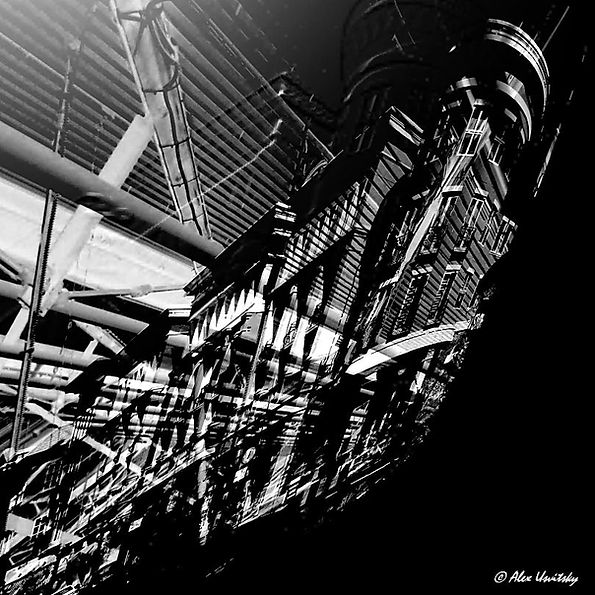
This artwork was born from the fusion of several photographic images into a single composition in order to explore an interplay of geometries, light, shadows and textures.
One day he was working on a watercolor painting which was not going well, so he folded it in half and was about to throw it into the trash can. As the painting landed in the trash it opened up to reveal a symmetrical pattern with a fold in the middle displaying a texture previously unknown to him. The texture seemed so sophisticated that he knew he could never match it using a brush.
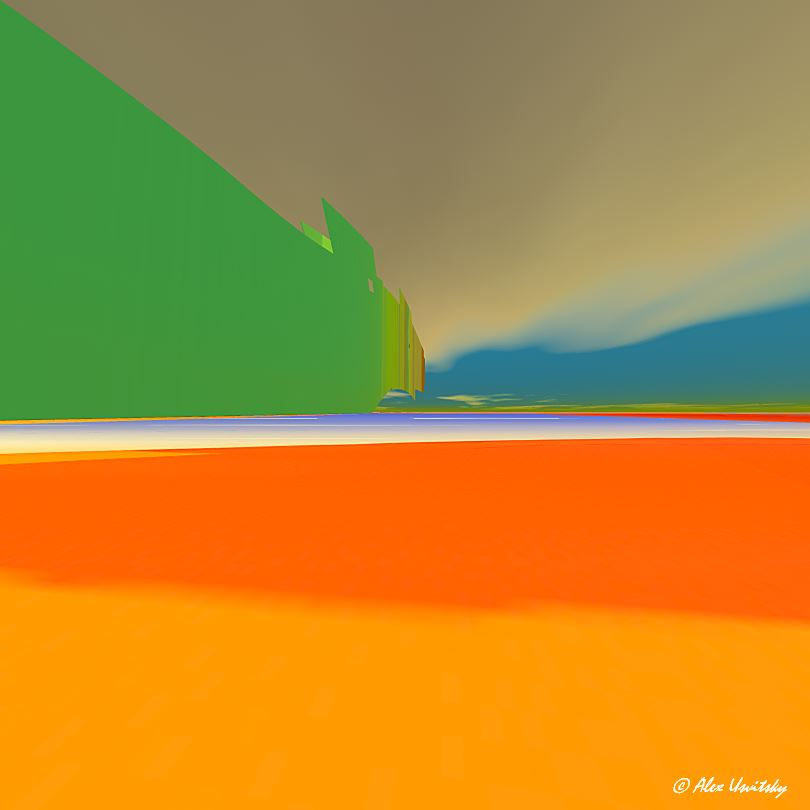
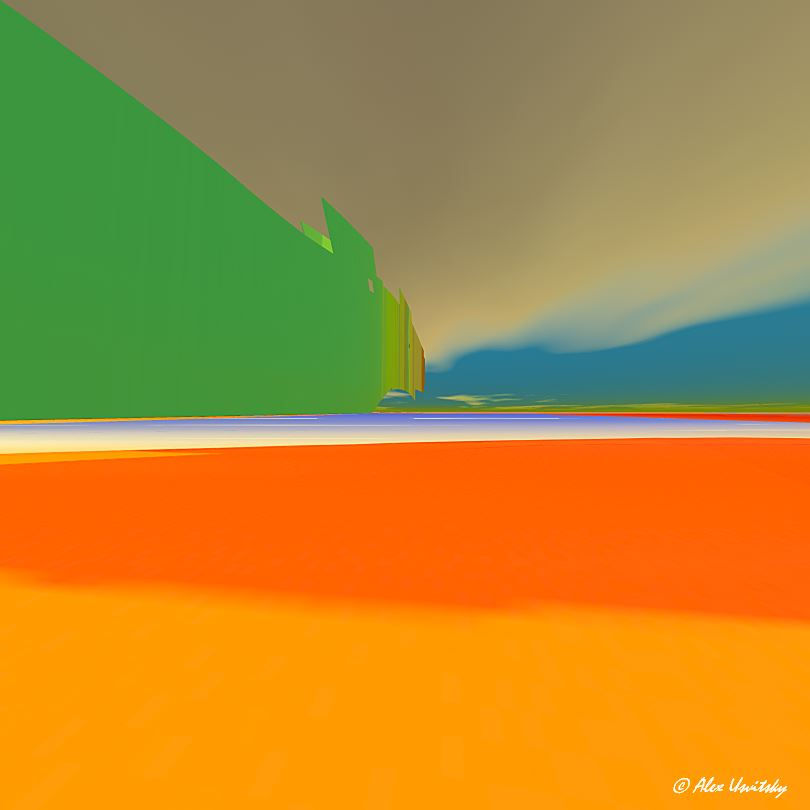
Dunes of Deconstruction #18 | Other
24 X 24
After years of working with computer generated models I ended up with a lot of discarded bits and pieces of digital content in need of recycling. This image was created in an attempt to give these discarded elements a new life as a work of art.
“On many occasions, I was delighted to see how a series of my mistakes would result in totally unintended but amazing effects.”
Alex was amazed to see his doomed painting that only moments before appeared hopelessly dull and uninspiring suddenly turn into a beautiful and vibrant image that he felt compelled to keep. That's how he got started with Decalcomania which quickly became his new obsession.

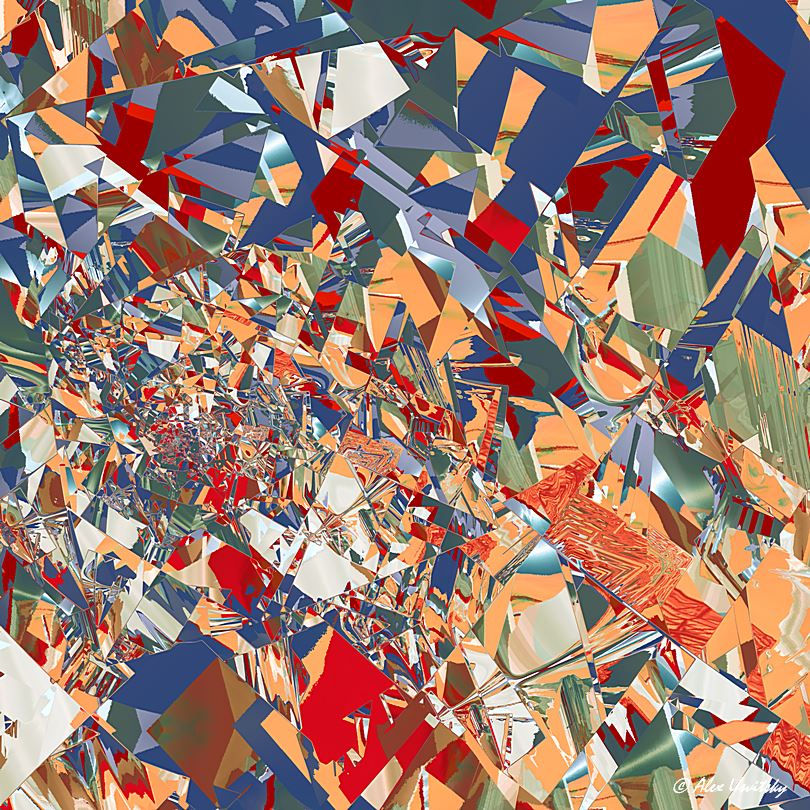
Dunes of Deconstruction #22 | Other
24 X 24
After years of working with computer generated models I ended up with a lot of discarded bits and pieces of digital content in need of recycling. This image was created in an attempt to give these discarded elements a new life as a work of art.
Decalcomania is the technique of placing wet paint between two sheets of paper and applying pressure resulting in a random texture created by chance. Free from the artist's control, it automatically produces unique and often beautiful patterns seemingly impossible to replicate.
After years of working with computer generated models I ended up with a lot of discarded bits and pieces of digital content in need of recycling. This image was created in an attempt to give these discarded elements a new life as a work of art.
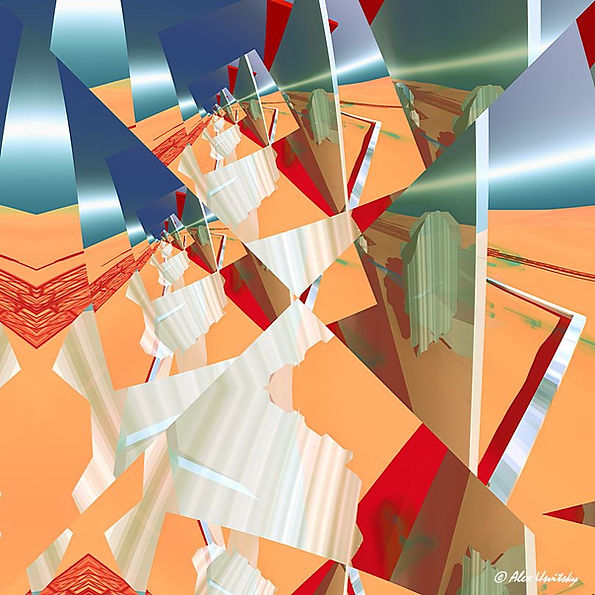
Dunes of Deconstruction #25 | Other
24 X 24
“Regardless of the medium, by that time I already got into a habit of starting every piece of artwork by first creating chaos with no conscious effort on my part.”
“While at work I struggled with the limitations of early design software, at home watercolor continued to be my hobby mostly because it enabled me to unwind and enjoy the freedom of the medium."

Objects of Inspiration #3 | Other
24 X 24
This artwork was born from the fusion of 3D models into a single composition in order to explore an interplay of geometries, light, shadows and textures.
Normally this technique requires no brushes but occasionally a mostly abstract pattern would provide hints of some shapes that could be enhanced and developed into a representational object using a brush. Most often it would suggest some rock formations or evoke surreal images of vegetation and even faces. This visual experience is not unlike seeing strange shapes or mysterious creatures in the clouds.

Objects of Inspiration #14 | Other
24 X 24
This artwork was born from the fusion of 3D models into a single composition in order to explore an interplay of geometries, light, shadows and textures.
After immigrating to the United States in 1982, Alex graduated from the College of Environmental Design at UC Berkeley and was fortunate to get a job at one of the most innovative architectural design firms based in Silicon Valley.
This artwork was born from the fusion of 3D models into a single composition in order to explore an interplay of geometries, light, shadows and textures.

Objects of Inspiration #29 | Other
24 X 24
These were the mid-1990s just before the arrival of the digital age and Alex began to explore some new techniques using color Xerox, Polaroid image transfer, and a computer. This approach cleared the way to move forward without waiting for inspiration or trying to come up with the subject matter - the two best friends of procrastination.
“It excites the imagination and can quickly turn into a meditation session where the subconscious rules and the mind is free of all constraints, just like in a dream."
As the artist watched computer technology evolve to generate exciting visual effects he found himself totally drawn to digital art. While technically very different from traditional watercolor or Decalcomania, he found the overall process of creating digital art to have much in common with both, especially if the artist views a computer more as playful and intuitive and less as an analytical tool.

Objects of Inspiration #44 | Other
24 X 24
This artwork was born from the fusion of 3D models into a single composition in order to explore an interplay of geometries, light, shadows and textures.
Today Alex works with a number of 3D modeling software programs, many of which are not intended for "painting" or "art" - AutoCAD, Revit, Sketchup, or DAZ 3D software. He usually starts with creating a virtual scene, populating it with randomly created images and 3D shapes, and applying colors and textures.
After years of working with computer generated models I ended up with a lot of discarded bits and pieces of digital content in need of recycling. This image was created in an attempt to give these discarded elements a new life as a work of art.

Silicon Landscape #63 | Other
24 X 24
As he continues to "fly around" the scene he takes snapshots to be exported as image files. These exported image files become his paintings. Using a computer and a camera he has been creating digital paintings since the early 2000s. Alex has not frequently exhibited his work. Many of his works are privately owned.

The Dumbfounded Gaze #19 |Other
24 X 24
The artwork draws the viewer into a world where geometry becomes a playground for exploration. Triangles, squares and other geometric forms intersect and intertwine, creating a visual language that speaks of both harmony and unpredictability. Some shapes align in orderly grids, while others break free, dispersing across the canvas in a seemingly haphazard manner.
“I simply invite the medium to take the lead and totally leave it to chance where it will take me.”
Not a solo artist yet? Subscribe to our solo exhibitions at TERAVARNA and share your art with the world!