A World Beyond the Canvas: Exploring the Many Forms of Visual Art

When we think of visual art, what comes to mind first? Perhaps a painting hanging in a gallery, a carefully drawn portrait, or a sculpture displayed in a museum. These are familiar representations of artistic expression, but visual art extends far beyond traditional canvases and frames. It exists in the photographs we take, the buildings we inhabit, the objects we use, and even the digital spaces we navigate.
Art does not always ask to be viewed in a gallery. Sometimes, it occupies a wall, takes shape in a public square, appears on a screen, or transforms an ordinary object into something worth looking at twice. The world of visual art is remarkably diverse, shaped by different materials, techniques, cultures, technologies, and ways of seeing.
So, what exactly falls under the umbrella of visual art? And how do its many forms influence the way we understand and experience the world?
1. Painting: More Than a Canvas and Brush
Painting remains one of the most recognizable forms of visual art, but its possibilities are far from limited. From delicate watercolours and expressive oil paintings to experimental acrylic compositions, artists use paint to explore subjects, emotions, identities, and ideas.
Different painting styles offer different experiences. Realism attempts to represent the visible world with accuracy, while Impressionism captures fleeting moments through light, colour, and movement. Abstract painting moves away from recognisable subjects, allowing shapes, textures, and colours to communicate independently.
A painting does not necessarily need to depict something familiar to make an impression. Sometimes, a combination of colours can communicate more than an elaborate narrative.
2. Drawing and Illustration: The Power of a Single Line
Drawing is often considered the foundation of visual art, but it is an independent art form with its own expressive possibilities. Pencil, charcoal, ink, pastels, and coloured pencils allow artists to create everything from quick observational sketches to highly detailed compositions.
Illustration takes drawing further by combining visual storytelling with communication. It appears in children's books, editorial publications, advertising, graphic novels, and educational materials.
Think about the illustrations accompanying a favourite childhood story. Sometimes, the images remain in our memories long after we have forgotten the exact words. That is the power of illustration: it gives visual form to imagination and makes stories accessible through images.
3. Sculpture: When Art Occupies Physical Space
Unlike painting and drawing, sculpture introduces a physical, three-dimensional experience. It allows viewers to observe an artwork from different angles, notice its proportions, and understand how it interacts with its surroundings.
Traditional materials such as stone, wood, clay, and bronze continue to inspire sculptors. Contemporary artists, however, frequently experiment with glass, metal, recycled materials, textiles, and unconventional objects.
Sculpture can be monumental or miniature, figurative or abstract. Some works occupy public spaces and become part of a city's identity, while others invite intimate engagement within galleries and private collections.
It also challenges an interesting assumption: art does not always have to exist on a flat surface. Sometimes, it needs space to breathe.
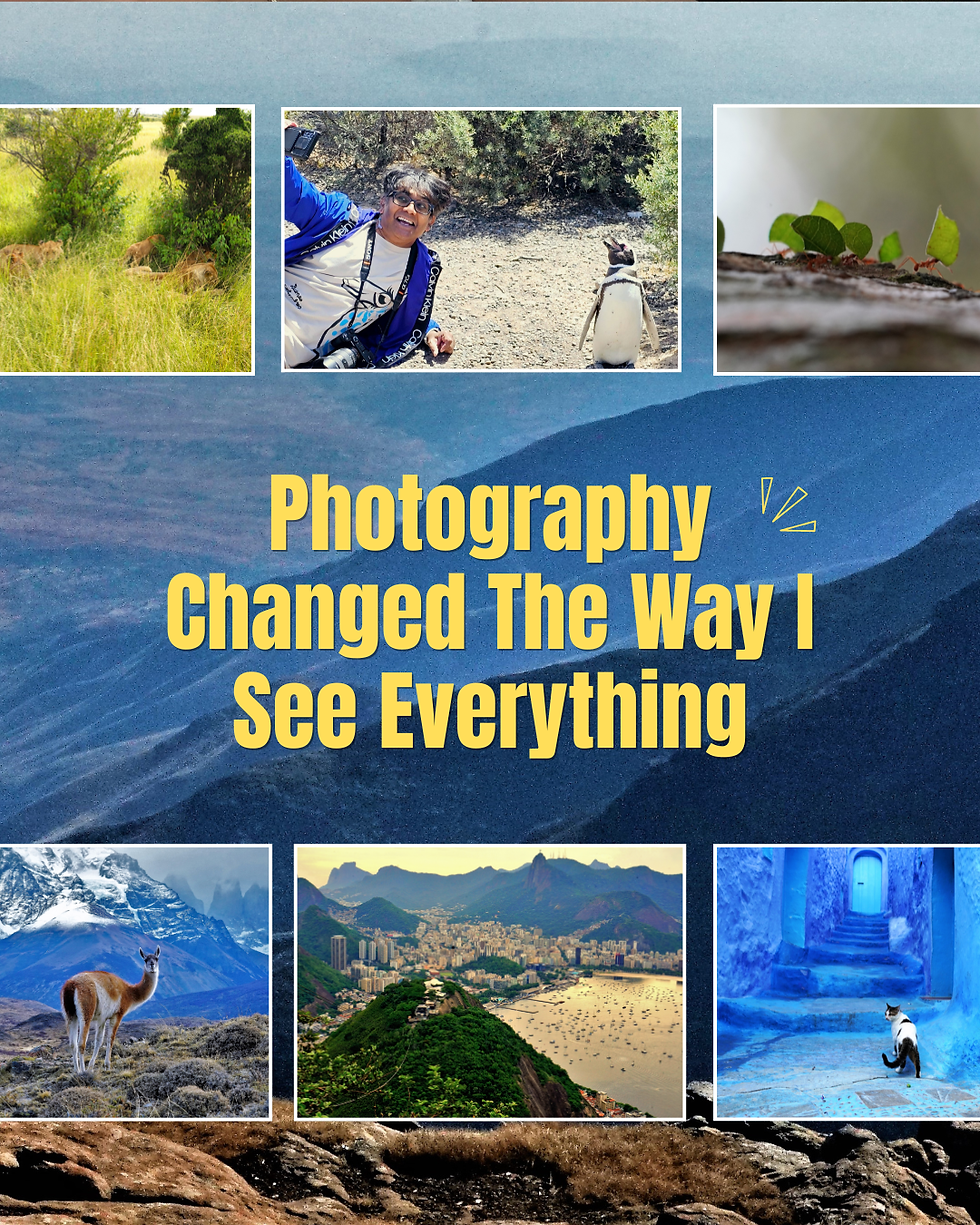
4. Photography: Finding Art in the Ordinary
Photography transformed visual art by introducing a medium capable of capturing moments with remarkable detail. Yet, fine art photography goes beyond simply recording what exists. It involves deliberate choices about composition, lighting, perspective, timing, and subject.
A photograph of an ordinary street can become compelling through an unusual angle. A familiar face can communicate an entirely different emotion through lighting and framing. Even an everyday object can become visually intriguing when photographed from an unexpected perspective.
Photography also offers artists opportunities to document social realities, preserve cultural histories, question established narratives, and experiment with visual storytelling.
The camera may capture a moment, but the photographer determines how that moment is seen.
5. Printmaking: The Art of Repetition and Experimentation
Printmaking is a fascinating visual art form that combines technical skill with creative experimentation. Instead of creating an image directly on paper or canvas, artists work with a prepared surface or matrix to transfer an image onto another material.
Some popular techniques include woodcut, linocut, etching, lithography, and screen printing.
Each method produces distinctive textures, patterns, and visual effects. Printmaking also introduces the possibility of producing multiple impressions of an original composition.
Historically, it played an important role in making images and artistic ideas more accessible. Today, contemporary printmakers continue to experiment with traditional techniques, combining them with modern materials and digital processes.
6. Digital Art: Creativity in the Age of Technology
What happens when the canvas becomes a computer screen?
Digital art has expanded the boundaries of artistic creation by introducing tools that were once unavailable to traditional artists. Digital painting, 3D modelling, vector illustration, photo manipulation, and generative art are just some of its many forms.
Artists can experiment with layers, textures, lighting, animation, and complex compositions without necessarily relying on physical materials.
The medium has also opened new possibilities for displaying and experiencing artwork. Digital exhibitions, virtual galleries, augmented reality, and interactive installations allow audiences to engage with art in increasingly different ways.
Importantly, digital art is not simply traditional art created using a computer. It has developed its own techniques, visual languages, and creative possibilities.
7. Architecture and Installation Art: When Space Becomes the Artwork
Visual art also exists in the spaces we occupy.
Architecture combines functionality, engineering, and aesthetics to create structures that influence how people experience their surroundings. From historic monuments to experimental contemporary buildings, architecture demonstrates how artistic thinking can shape everyday environments.
Installation art takes a different approach. Artists transform entire spaces using objects, lighting, sound, textures, projections, and other materials. Rather than viewing an artwork from a distance, visitors may find themselves physically surrounded by it.
Some installations are temporary, designed to exist only for a particular exhibition or event. Others invite audience participation, making the viewer an active part of the artistic experience.
These forms remind us that art does not always need to be an object. Sometimes, the experience itself becomes the artwork.
8. Textile and Ceramic Art: Creativity in Unexpected Materials
Not all visual art begins with paint, paper, or stone. Textiles and ceramics demonstrate how everyday materials can become powerful artistic mediums.
Textile art includes weaving, embroidery, quilting, tapestry, and fibre-based installations. Traditionally associated with craft and domestic practices, these techniques have increasingly found recognition in contemporary art.
Ceramic art similarly moves beyond functional pottery. Artists use clay to create sculptural objects, intricate forms, experimental surfaces, and conceptual works.
Both mediums challenge the distinction between fine art and craft. They also demonstrate that artistic value is not determined by the material used, but by the ideas, skills, and creative decisions behind the work.
Why Does Understanding Different Art Forms Matter?
Exploring different forms of visual art allows us to appreciate creativity beyond familiar categories. It encourages us to look at materials differently, recognise artistic expression in unexpected places, and understand how cultural, historical, and technological developments influence creative practices.
It also broadens opportunities for artists. Someone who feels restricted by painting might discover a natural interest in photography, sculpture, digital illustration, or mixed media. Experimenting with different mediums can introduce fresh perspectives and even transform an established artistic practice.
For art collectors and enthusiasts, understanding these distinctions can make discovering artwork equally rewarding. Each medium offers a different relationship between the artist, the artwork, and its audience.
Looking Beyond the Familiar
Perhaps the most interesting thing about visual art is that it refuses to remain within fixed boundaries. New materials emerge, technologies evolve, and artists continue to question what an artwork can be.
A sculpture made from discarded objects, a photograph of an overlooked street corner, a digital composition, or an intricate textile installation can all communicate ideas worth exploring.
We often associate art with the finished object, but creativity begins much earlier: with curiosity, observation, experimentation, and the desire to express something.
The next time you encounter an artwork, look beyond its medium. Ask yourself what inspired its creation, what choices shaped its appearance, and what it makes you feel or question.
Your art deserves to be seen beyond the canvas. Take your creativity to an international platform with TERAVARNA’s 16th OPEN International Juried Art Competition. Submit your original artwork, compete for cash prizes, and gain opportunities for recognition and exposure.
After all, the world of visual art is not confined to the canvas. It is everywhere we find the courage to see the ordinary differently.